
World Religions & Philosophies – Ancient Mythologies – Norse Mythology
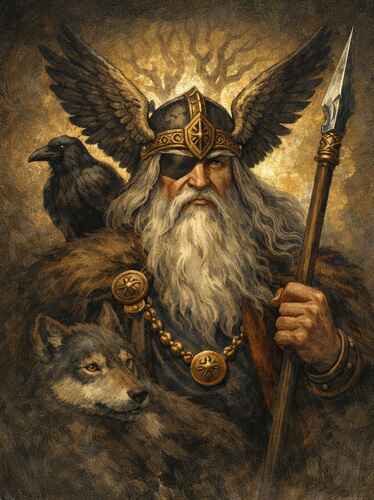
Table of Contents
Overview
Norse mythology refers to the collection of myths and religious beliefs of the ancient North Germanic peoples, particularly those living in Scandinavia during the Viking Age (c. 800–1100 AD). It is a complex system of gods, giants, dwarves, and mythical creatures centered around cosmological events such as the creation of the world and its ultimate destruction at Ragnarök. Norse myths were passed down orally for centuries before being written down in medieval Iceland, long after the region had been Christianized.
Historically, however, the roots of Norse religion go back well before the Viking Age. What we call “Norse mythology” is the Scandinavian branch of a wider Germanic religion that developed across the long Nordic Iron Age (roughly 500 BC–AD 1100) and took clearer shape as North Germanic peoples differentiated in the Proto-Norse period. Its deeper background is commonly traced to older Proto-Germanic traditions and, beyond that, shared Indo-European mythic patterns (for example, the widespread “thunder-god vs. serpent/chaos” motif that helps explain why Thor resembles other Indo-European storm deities).
We can only “see” this early development in fragments: Roman authors in the 1st century AD describe Germanic worship using Roman god-names (a practice scholars call interpretatio romana), often taken to reflect major Germanic deities later known in Norse form (e.g., Odin/Thor/Týr). Archaeology and inscriptions then carry the trail forward through the Migration and Vendel periods into the Viking Age, when the myth-world becomes more recognizable as “Norse.” The people groups most directly associated with this religion were the North Germanic-speaking societies of Denmark, Norway, Sweden, and the Norse North Atlantic world (including Iceland), though they shared many religious ancestors and parallels with other Germanic peoples across northern Europe.
Literary Sources
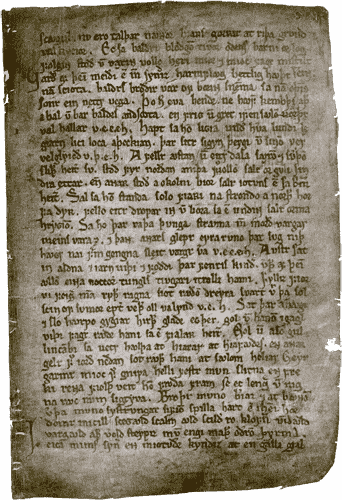
Our knowledge of Nordic mythology primarily comes from a few medieval Icelandic texts, written centuries after the Viking Age:
Poetic Edda (c. 1270 AD): A collection of mythological and heroic poems, believed to preserve much older oral traditions. Key myths include the creation story (Völuspá), the wisdom of Odin (Hávamál), and the loss and recovery of Thor’s hammer (Pþrymskviða).
Prose Edda (c. 1220 AD): Written by Snorri Sturluson, it serves as a guide for poets, systematically organizing myths, genealogies of gods, and explaining poetic language.
Heimskringla (c. 1230 AD): Also by Snorri Sturluson, it presents Norse gods as ancient human kings who were later deified.
Gesta Danorum (c. 1200 AD): By Saxo Grammaticus, this work recounts Danish history and myth, often portraying gods like Odin and Thor as human heroes.
Skaldic Poetry (800–1200 AD): A vast body of complex praise poetry filled with mythological references and kennings, composed by court poets.
Mythological Beliefs
Several recurring themes shape Nordic mythology
- Creation from Chaos: The world emerged from Ginnungagap, a yawning void, shaped by the gods Odin, Vili, and Vé.
- World Tree Yggdrasill: A giant cosmic tree connecting the nine worlds, symbolizing the structure of the universe.
- The inevitability of Fate: Even the gods are subject to destiny, culminating in the apocalyptic battle of Ragnarök.
- Conflict between Gods and Giants: The gods (Aesir and Vanir) constantly battle chaotic giants (Jotnar), representing order versus chaos.
- Cycle of Death and Renewal: After Ragnarök, a new world rises from the sea, purified and renewed.
Norse Pantheon
| Name | Role / Duty | God/Goddess Of |
| Odin | All-Father, ruler of the Aesir | Wisdom, war, death, magic, poetry, and prophecy |
| Frigg | Odin’s wife, queen of Asgard | Marriage, motherhood, household, foresight |
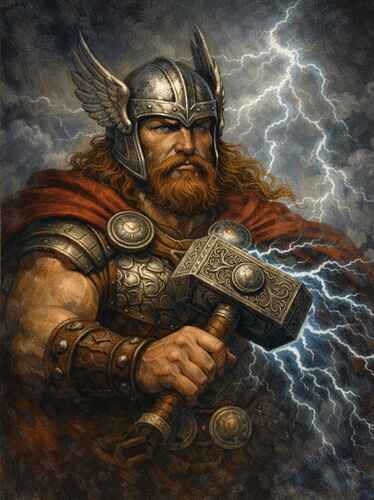
| Thor | Odin’s son, defender of gods | Thunder, storms, strength, protection, farmers |
| Baldr | Son of Odin and Frigg | Beauty, innocence, peace, light |
| Tyr | One-handed god of war and justice | War, law, heroic glory |
| Loki | Trickster god, shape-shifter | Mischief, chaos, deception, fire (ambiguous figure) |
| Heimdall | Guardian of Bifrost (rainbow bridge) | Watchfulness, foresight, protector of the gods |
| Njord | Chief of the Vanir gods | Sea, wind, wealth, seafaring, fishing |
| Freyja | Daughter of Njord, twin of Freyr | Love, beauty, fertility, magic, war, death |
| Freyr | Son of Njord, twin of Freyja | Fertility, prosperity, sunshine, kingship, harvest |
| Skadi | Winter goddess, giantess married to Njord | Winter, skiing, hunting, mountains |
| Bragi | God of poetry and eloquence | Poetry, music, eloquence, inspiration |
| Idunn | Keeper of apples of youth | Youth, immortality, rejuvenation |
| Sif | Thor’s wife, known for golden hair | Fertility, family, crops (esp. wheat) |
| Hel | Ruler of the realm of the dead (Helheim) | Death, the underworld (non-warrior dead) |
| Aegir | Giant-like sea god | Ocean, brewing, hospitality (feasts of the gods) |
| Ran | Aegir’s wife | Drowning, sea’s grip (captures souls of sailors) |
| Eir | Healing goddess | Medicine, healing arts |
| Forseti | Son of Baldr and Nanna | Justice, reconciliation, mediation |
| Group | Description |
| Æsir | Main gods of war, power, and order (Odin, Thor, Frigg, etc.) |
| Vanir | Fertility and nature gods (Njord, Freyr, Freyja) |
| Jötnar (Giants) | Primeval forces of chaos; some intermarried with gods |
| Other Spirits | Valkyries (choosers of the slain), Norns (fate), Elves, Dwarves |
The Nine Worlds of Nordic Mythology

Asgard
Realm of the Æsir gods (Odin, Thor, Frigg, etc.), Located high in the branches of Yggdrasill. Contains Valhalla, Odin’s hall for slain warriors. Connected to Midgard by Bifröst, the rainbow bridge. Symbolizes heavenly authority, war, order, and divine power.
Midgard
Realm of humans — literally “Middle Enclosure.” Lies at the center of the Nine Worlds. Surrounded by a vast ocean and encircled by the Midgard Serpent (Jörmungandr). Connected to Asgard by the Bifröst bridge. Symbolizes the human world and temporal life.
Jötunheim (Jotunheimr)
Realm of the Jötnar (giants) — chaotic, primeval beings. Often in conflict with the gods of Asgard. Rugged, wild landscapes — mountains, frost, wilderness. Home of Loki, and giants like Thrym and Hrungnir. Symbolizes chaos, opposition, and ancient forces.
Vanaheim (Vanaheimr)
Realm of the Vanir gods — associated with nature and fertility. Gods like Njord, Freyr, and Freyja come from here. After the Aesir-Vanir war, the Vanir merged with the Æsir. Symbolizes fertility, peace, and abundance.
Alfheim (Álfheimr)
Realm of the Light Elves (Ljósálfar) — beautiful, semi-divine beings. Governed by Freyr, god of fertility. Described as a place of light, art, and joy. Symbolizes beauty, inspiration, and divine grace.
Svartalfheim / Nidavellir
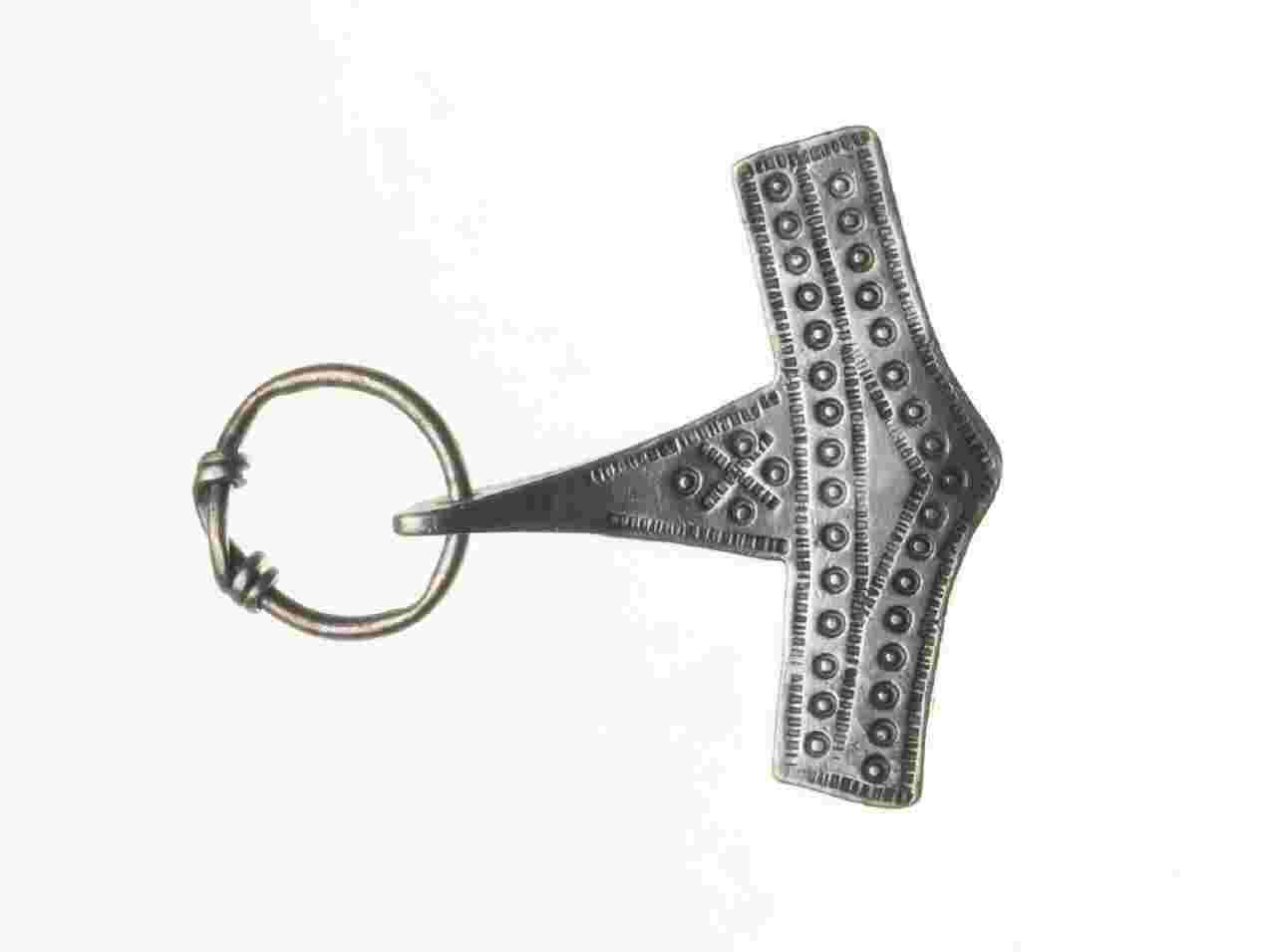
Realm of the Dwarves (Svartálfar) — master craftsmen and miners. Dark, underground forges; creators of legendary weapons like Mjölnir (Thor’s hammer). Sometimes called Nidavellir (“dark fields”). Symbolizes craftsmanship, secrets, and earth’s riches.
Helheim (Hel)
Realm of the dead who did not die in battle. Ruled by the goddess Hel, daughter of Loki. Cold, misty, and shadowy — different from Christian Hell. Souls here are not necessarily punished. Symbolizes death, passivity, and the grave.
Niflheim
Realm of ice, fog, and cold — one of the oldest worlds. Source of primal frost in creation myth. Sometimes overlaps with Helheim, but also described as more elemental. Home to the well Hvergelmir, where many rivers originate. Symbolizes entropy, lifelessness, and ancient cold.
Muspelheim (Múspellsheimr)
Realm of fire and heat, opposite of Niflheim. Home to fire giants, especially Surtr, who leads destruction at Ragnarök. Source of primordial fire during creation. Symbolizes chaotic energy, destruction, and transformation.
Yggdrasill – The World Tree
The cosmic tree that connects all nine worlds. Its roots extend into Niflheim, Jötunheim, and Asgard (via the Well of Urd). The Norns (fates) dwell at its base, weaving destiny. Animals like the eagle, dragon Níðhöggr, and squirrel Ratatoskr live on it.
Correlations Between Nordic Mythology and Earlier Religions
| Norse Element | Earlier Counterpart | Religious Tradition | Similarity/Explanation |
| Odin (All-Father, god of wisdom and war) | Dyaus Pitar / Zeus Pater / Enlil | PIE (proto-indo) / Greek / Mesopotamian | All represent “Sky Father” or chief god figure with attributes of authority and rulership. Odin merges wisdom, war, and poetry. |
| Thor (thunder god, protector) | Perkūnas / Indra / Zeus / Baal | Baltic / Vedic / Greek / Canaanite | Thunder gods who wield lightning, defend cosmic order, and battle chaos serpents (e.g., Jörmungandr vs Thor parallels Indra vs Vritra). |
| Tyr (god of justice, war) | Mithra / Mars | Indo-Iranian / Roman | Warriors or justice-bringers; Tyr’s one-handedness may symbolize sacrifice like Mithra’s. |
| Frigg (wife of Odin, goddess of marriage) | Hera / Shala | Greek / Mesopotamian | Queens of the gods; protectors of marriage and home. |
| Freyr (fertility god, peace) | Tammuz / Adonis | Babylonian / Greco-Syrian | Dying-and-rising fertility gods tied to seasonal cycles. |
| Freyja (love, war, magic) | Ishtar / Aphrodite | Babylonian / Greek | Love and beauty goddesses with strong ties to war and magic. |
| Loki (trickster, chaos agent) | Prometheus / Enki / Set | Greek / Sumerian / Egyptian | Culture-bringers or chaotic tricksters; morally ambiguous; bring transformation, often through deception. |
| Hel (goddess of the dead) | Ereshkigal / Persephone | Mesopotamian / Greek | Rulers of the underworld; associated with cold, shadowy death realms. |
| Yggdrasill (world tree) | Ashvattha Tree / Tree of Life | Vedic / Biblical / Mesopotamian | World axis concept; connects heaven, earth, and underworld — symbol of life and cosmic order. |
| Ragnarök (end-time destruction and renewal) | Zoroastrian Frashokereti / Greek Titanomachy / Biblical Revelation | Persian / Greek / Biblical | Apocalyptic battle, death of gods, rebirth of a purified world. |
| The Norns (weavers of fate) | Moirai (Fates) / Spinners of Destiny | Greek / Indo-European | Three female figures controlling fate and destiny — a widely shared motif. |
| Nine Worlds | Seven Heavens / Nine Realms | Sumerian / Biblical / Indo-European | Cosmological layering; vertical organization of divine realms (heaven, earth, underworld). |
| Valkyries (choosers of the slain) | Angels / Psychopomps (e.g., Hermes, Anubis) | Greek / Egyptian | Divine figures who guide or select souls after death. |
| World created from Ymir’s body | Tiamat (cut in two to form heaven and earth) | Babylonian (Enuma Elish) | Cosmic dismemberment myths where a primordial being’s body becomes the universe. |
Additional Correlations to Other Religions
These correlations suggest that Nordic mythology is not isolated, but rather part of a broader Proto Indo-European (PIE) and post-Babel religious memory. The same core motifs appear across cultures:
- Sky father and thunder gods
- World trees or sacred mountains
- Chaos dragons or serpents
- Dying gods and seasonal myths
- Underworld queens
- Fate-controlling women
- End-time judgments and world renewal
Historical Origins
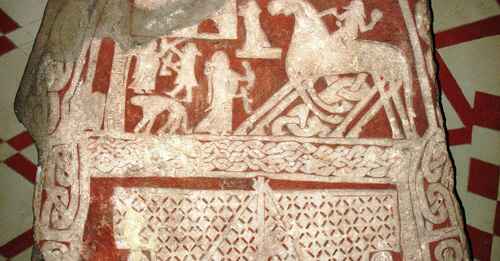
Norse mythology did not emerge in isolation. It descended from earlier Proto-Indo-European religious traditions, which also gave rise to Greek, Roman, and Hindu mythologies. Early Germanic tribes, as described by Roman historians like Tacitus, worshiped deities resembling Odin, Thor, and Tyr under different names.
However, the religion evolved orally over millennia, preserving only fragmented memories of a once unified belief system. By the time Norse myths were recorded, they reflected a deeply localized and heavily evolved religious worldview, far removed from their ancient origins.
Correlation to Babylon
Nordic mythology offers a fascinating glimpse into the religious imagination of pre-Christian Scandinavia. While richly complex and artistically powerful, it ultimately showcases the same post-Babel pattern seen worldwide: ancient people groups retained partial memories of the true God but replaced Him with a system of many gods, nature spirits, and fatalistic worldviews. Through careful study, we can trace these myths back to a common historical origin, validating the biblical record of humanity’s early spiritual history.
Biblical Perspective
From a biblical standpoint, Nordic mythology represents one of the many corrupted religious traditions that developed after the Tower of Babel (Genesis 11). Following God’s judgment and the scattering of humanity, distorted memories of the true Creator and His attributes spread across the world.
In Nordic mythology, there are faint echoes of original truths:
- Creation from an empty void parallels Genesis 1:2.
- The existence of a supreme “mighty one” post-Ragnarök hints at the memory of a supreme God.
- Yet these truths are obscured by a pantheon of gods subject to fate, reflecting humanity’s tendency to replace the worship of the Creator with created beings (Romans 1:25).
References
Comparitive Mythologies – Jaan Puhvel
Norse and Greek Mythology Comparison – Paganheim
Leave a Reply
You must be logged in to post a comment.