


Table of Contents
Overview: The Historical Development of the Laws of Learning
The “laws of learning” are not modern inventions, nor are they biblical doctrines. They are observed principles of human cognition, identified over centuries through education, rhetoric, apprenticeship, and later formal psychology. Long before neuroscience existed, educators recognized that the human mind follows predictable patterns in how it acquires, stores, and applies knowledge.
Early forms of these laws can be traced to classical education, where teachers noticed that first impressions shaped understanding, repetition strengthened memory, and emotionally meaningful lessons were retained far longer than abstract instruction. These observations continued through medieval catechesis and early modern schooling, where structured repetition, memorization, and practice were central to learning.
In the late 19th and early 20th centuries, these long-standing observations were formalized within educational psychology, particularly through researchers such as Edward Thorndike, who organized them into what became known as the laws of learning. Modern cognitive science has since refined and expanded these ideas using neuroscience, memory research, and behavioral psychology, confirming that learning is deeply shaped by order, repetition, emotional significance, and readiness.
While the Bible does not explicitly teach the “laws of learning” as a psychological system, Scripture consistently teaches in ways that align with them, reflecting an accurate understanding of how the human mind functions. This makes the laws especially valuable for Christian educators, apologists, and evangelists—not as doctrine, but as tools.
The laws of learning are observed cognitive principles describing how humans acquire, retain, apply, and resist information. While not biblical doctrines, these patterns are consistently reflected in how Scripture teaches, corrects, and forms belief.
The Learning Flowchart: How Understanding Forms
This chart summarizes how learning progresses cognitively. Each stage builds on the previous one, explaining both how beliefs form and why they are difficult to change.
Primacy
First learning forms the framework.
Initial beliefs shape how all later information is interpreted.
Cognitive role:
Creates foundational mental schemas.
→
Retention
Repetition strengthens memory.
Revisited beliefs become durable through reinforcement.
Cognitive role:
Consolidates memory through repetition.
→
Exercise
Use turns belief into habit.
Practiced ideas move from thought into behavior.
Cognitive role:
Transfers learning into automatic patterns.
→
Effect
Meaning anchors belief.
Emotion and consequence deepen attachment to ideas.
Cognitive role:
Emotion strengthens memory and resistance.
→
Readiness
Openness determines change.
Willingness governs whether beliefs are defended or revised.
Cognitive role:
Controls access to belief revision.
The Classical and Modern Formulation of the Laws of Learning
Before examining the individual laws of learning, it is essential to clarify what these laws are—and what they are not. The “laws of learning” are not biblical commands, nor are they presented in Scripture as a formal psychological system. Rather, they are observed patterns of human cognition, identified through centuries of teaching, training, and later scientific study. They describe how people tend to learn, not what they ought to believe.
The value of these laws lies in their descriptive accuracy, not in doctrinal authority. Scripture does not teach them explicitly; however, Scripture consistently teaches in ways that align with them, which makes them a useful framework for understanding education, discipleship, and evangelism.
From Observation to Psychology
Long before psychology existed as a formal discipline, educators noticed that learning followed recognizable patterns. Teachers, craftsmen, rhetoricians, and mentors learned—through experience—that instruction was most effective when it followed certain principles.
Early educators observed patterns without scientific terminology.
They recognized that first lessons carried unusual weight, that repetition strengthened understanding, and that emotionally meaningful instruction was remembered far longer than abstract information. These observations were practical, not theoretical, and emerged naturally wherever teaching occurred.
Apprenticeship models reinforced practice and repetition.
In trades and crafts, learning was inseparable from doing. Skills were taught through imitation, repetition, correction, and long-term reinforcement. Knowledge was not merely transferred; it was formed. This model implicitly recognized what modern science now confirms: repeated use strengthens mental and physical pathways.
Classical rhetoric emphasized first impressions and narrative.
In the classical world, teachers of rhetoric understood that how an idea was first presented shaped how it would be received thereafter. Storytelling, analogy, and vivid imagery were used deliberately because they engaged memory, emotion, and understanding simultaneously. These techniques were not accidental; they reflected an intuitive grasp of how the mind learns.
Modern Formalization
In the 19th and early 20th centuries, these long-standing observations were systematically organized within the emerging field of educational psychology. Researchers sought to explain why these patterns existed, not merely that they did. Psychologists such as Edward Thorndike articulated what became known as the laws of learning, identifying repeatable principles that governed memory, habit formation, and behavior. These laws did not replace earlier insights; they formalized them.
Modern cognitive science later confirmed these patterns through neurological and behavioral research, showing that:
- Neural pathway formation occurs through repeated exposure and use, making early learning particularly durable.
- Memory consolidation strengthens information that is revisited, practiced, and meaningfully connected.
- Emotional tagging causes experiences tied to fear, joy, meaning, or identity to be remembered more strongly.
- Resistance to re-learning false foundations exists because the brain does not easily dismantle established frameworks; it prefers to interpret new information through existing structures.
This last point is especially significant. Once a belief system is formed—especially early—it does not simply disappear when challenged. Even when a person consciously rejects an old belief, its conceptual framework may continue to influence thinking, reactions, and assumptions. Modern psychology recognizes this as a feature of human cognition, not a moral failure.
An Important Clarification for Bible Readers
It is crucial to state clearly: the Bible does not teach the laws of learning as a psychological doctrine. Scripture is not a textbook on cognitive science. However, Scripture consistently assumes the reality of these cognitive patterns in how it commands teaching, remembrance, correction, and renewal of the mind. For this reason, the laws of learning should be understood as a tool, not a doctrine. Used correctly, these laws (or principles) do not replace Scripture; they serve as tools for understanding how people receive, retain, and resist truth. They help believers by helping us understand the human mind to which God’s truth is addressed.
- Understand why early instruction matters
- Recognize why false beliefs persist
- Exercise patience in discipleship
- Approach evangelism with realism and compassion
The Law of Primacy (First Learning)

Summary
The Law of Primacy states that what is learned first is learned strongest and remembered longest. Initial beliefs form the mental framework through which all later information is interpreted. Because of this, early instruction—whether true or false—has a disproportionate influence on long-term thinking, reasoning, and worldview. This law does not originate in Scripture, nor is it taught as a biblical doctrine. It is a recognized cognitive pattern, observed historically and confirmed by modern psychology. However, Scripture consistently acknowledges and works within this reality, making the law highly useful for teaching, discipleship, and evangelism.
Explanation and Cognitive Basis
When the mind encounters new information, it does not store facts in isolation. Instead, it builds frameworks (often called schemas) that organize meaning. The first framework created becomes the reference point for everything that follows.
Modern cognitive science shows that:
- Early learning forms strong neural pathways
- Later information is filtered through earlier assumptions
- Correction requires dismantling and rebuilding, not merely adding facts
- False foundations are more resistant to change than ignorance
This explains why:
- Misinformation learned early is difficult to remove
- People often reinterpret truth to fit existing beliefs
- Emotional and social reinforcement strengthens early learning even further
Primacy does not mean people cannot change—but it explains why change is costly, slow, and often uncomfortable.
Scriptural Alignment (Supportive, Not Doctrinal)
The Bible does not name the Law of Primacy, yet it repeatedly assumes its reality by emphasizing early instruction, foundations, and first teachings. These passages do not teach a psychological law, but they reflect an accurate understanding of how belief formation works.
Key patterns in Scripture:
- Early formation matters –
- “Train up a child in the way he should go; even when he is old he will not depart from it.” (Proverbs 22:6)
- Foundations determine outcomes
- “For no one can lay a foundation other than that which is laid.” (1 Corinthians 3:11)
- First beliefs shape later understanding
- “As a man thinks in his heart, so is he.” (Proverbs 23:7)
- False foundations are dangerous
- “See to it that no one takes you captive by philosophy and empty deceit.” (Colossians 2:8)
- Correction is harder than instruction
- “Solid food is for the mature… trained by constant practice.” (Hebrews 5:14)
Implications for Believers
This directly correlates to the emphasis in scripture on the renewal of the mind (Romans 12:2), not merely a one-time decision. Understanding the Law of Primacy helps believers:
- Be patient with themselves during spiritual growth
- Recognize lingering thought patterns from pre-conversion life
- Avoid discouragement when old ideas resurface
- Appreciate the need for intentional re-teaching and renewal
Implications for Evangelism
Evangelism is not just about presenting truth—it is about re-founding understanding. The Law of Primacy is crucial for evangelism:
- Most people did not arrive at their worldview through careful reasoning
- They were taught—often early—by family, culture, school, or media
- These beliefs feel self-evident to them
- Even after repentance, old frameworks often remain in memory
This explains:
- Why objections persist after conversion
- Why worldview change takes time
- Why arguments alone are often ineffective
- Why discipleship must follow conversion
How to Teach the Law of Primacy (Practical Method)
This method avoids confrontation and fosters understanding.
- Illustrate, don’t argue – Use examples of first impressions, accents, habits, or childhood learning
- Name the pattern – Help learners recognize why certain beliefs feel obvious
- Normalize resistance – Emphasize that difficulty does not equal dishonesty
- Redirect to foundations – Ask: “Where did you first learn this?”
- Rebuild patiently – Replace frameworks gradually, not forcefully
The Law of Retention
Summary
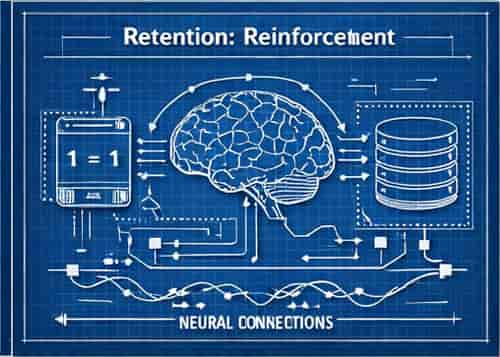
The Law of Retention states that we remember best what we understand, revisit, and reinforce. Information that is merely heard or encountered once is quickly forgotten, while knowledge that is repeatedly recalled, reviewed, and applied becomes durable. Like the other laws of learning, this principle is not taught in Scripture as a formal psychological rule. It is a long-recognized cognitive pattern, confirmed by modern memory research. Scripture, however, consistently teaches in ways that assume this reality, making retention a vital concept for spiritual growth, teaching, and evangelism. Retention explains why exposure to truth does not automatically produce understanding, why believers forget foundational teachings, and why discipleship requires repetition rather than novelty.
Explanation and Cognitive Basis
Retention is not about intelligence; it is about reinforcement. Modern cognitive science distinguishes between short-term exposure and long-term memory consolidation. The brain does not retain most information unless it is:
- Understood meaningfully
- Recalled intentionally
- Reinforced repeatedly
- Connected to use or significance
Memory research shows that:
- Information decays rapidly without review
- Repetition strengthens neural pathways
- Active recall is far more effective than passive listening
- Understanding improves retention more than memorization alone
This explains why people can:
- Hear the same message many times yet fail to retain it
- Remember songs, stories, and repeated phrases easily
- Forget abstract facts not reinforced through use
Scriptural Alignment (Supportive, Not Doctrinal)
Scripture does not define a “law of retention,” yet it constantly emphasizes remembrance, repetition, and review. The Bible assumes that truth must be revisited to be retained. These passages reflect an understanding that truth must be reinforced if it is to remain active in the mind:
- Commands to remember
- “Take care, lest you forget the LORD.” (Deuteronomy 6:12)
- Intentional repetition
- “These words… you shall teach them diligently.” (Deuteronomy 6:6–7)
- Rehearsal through practice
- “I will remind you of these qualities.” (2 Peter 1:12–13)
- Failure linked to forgetting
- “My people are destroyed for lack of knowledge.” (Hosea 4:6)
- Teaching through repetition
- “To write the same things to you is no trouble to me and is safe for you.” (Philippians 3:1)
Implications for Believers
This reframes repetition not as redundancy, but as spiritual maintenance. The Law of Retention explains many common spiritual struggles:
- Why believers forget core doctrines
- Why spiritual growth plateaus without reinforcement
- Why regular Scripture reading matters
- Why worship, prayer, and teaching are repetitive by design
Retention shows that:
- Growth requires returning to truth, not merely discovering new ideas
- Forgetting is normal; neglect is dangerous
- Spiritual disciplines function as memory reinforcement
Implications for Evangelism
Retention reminds us that learning truth is a process, not an event. Retention is critical in evangelism because:
- First exposure rarely produces lasting change
- One conversation seldom reshapes worldview
- Truth must be revisited to counter long-held beliefs
Evangelistically, this explains:
- Why follow-up matters after conversion
- Why discipleship must be ongoing
- Why churches that emphasize novelty often produce shallow understanding
- Why patience is essential when people struggle to “get it”
How to Teach the Law of Retention
This mirrors how Scripture teaches—through reminders, cycles, and repeated instruction. Effective teaching methods include:
- Intentional repetition – Revisit key ideas regularly
- Active recall – Ask learners to explain concepts back
- Layered learning – Build new ideas on repeated foundations
- Application – Connect truth to action
- Spaced review – Reintroduce concepts over time, not all at once
The Law of Exercise (Practice)
Summary
The Law of Exercise states that learning is strengthened through use. Knowledge that is practiced becomes more secure, while knowledge that is neglected weakens over time. Understanding alone is not sufficient; learning must be reinforced through application. This law reflects a well-established cognitive principle: neural pathways grow stronger when they are repeatedly activated and weaken when they are ignored. While the Bible does not articulate this as a psychological rule, Scripture consistently assumes that truth must be lived, not merely known, making this law especially relevant for discipleship and evangelism.
Explanation and Cognitive Basis
Modern neuroscience confirms that learning is not static. The brain operates on a principle often summarized as “use it or lose it.” Without exercise, learning remains fragile. With exercise, it becomes integrated into behavior and identity. Research shows that:
- Repeated use strengthens neural connections
- Inactive pathways weaken and eventually fade
- Practice moves information from conscious effort to habitual response
- Skills and beliefs are stabilized through action
This applies not only to physical skills, but also to:
- Reasoning patterns
- Moral habits
- Worldview assumptions
- Spiritual disciplines
Scriptural Alignment (Supportive, Not Doctrinal)
Scripture does not define a “law of exercise,” yet it repeatedly emphasizes doing as essential to growth. Biblical teaching assumes that truth becomes established through practice. These passages reflect the assumption that truth must be exercised to remain alive.
- Hearing alone is insufficient
- “Be doers of the word, and not hearers only, deceiving yourselves.” (James 1:22)
- Practice leads to maturity
- “Solid food is for the mature, who because of practice have their senses trained.” (Hebrews 5:14)
- Obedience reinforces understanding
- “If anyone’s will is to do God’s will, he will know.” (John 7:17)
- Neglect leads to decay
- “Do not neglect the gift you have.” (1 Timothy 4:14)
- Faith expressed in action
- “Faith by itself, if it does not have works, is dead.” (James 2:17)
Implications for Believers
Exercise reframes obedience not as legalism, but as reinforcement. The Law of Exercise explains why:
- Knowledge without obedience produces stagnation
- Spiritual growth requires intentional practice
- Disciplines shape belief, not merely reflect it
For believers, this means:
- Growth comes through lived obedience
- Theology must be applied to daily life
- Neglecting truth weakens understanding
Implications for Evangelism
In evangelism and discipleship:
- New believers must practice truth early
- Habits form quickly in early stages of faith
- Application stabilizes belief
This explains why:
- Discipleship must begin immediately after conversion
- Behavioral change supports worldview change
- Teaching without application produces shallow faith
Evangelism does not end with assent—it continues through guided practice.
How to Teach the Law of Exercise
This mirrors biblical discipleship: learn → practice → grow. Effective teaching methods include:
- Immediate application – Encourage practice as soon as truth is learned
- Incremental habits – Small, consistent actions
- Modeling – Demonstrate lived examples
- Feedback and correction – Reinforce correct practice
- Consistency over intensity – Regular use builds stability
The Law of Effect (Meaning and Emotion)
Summary
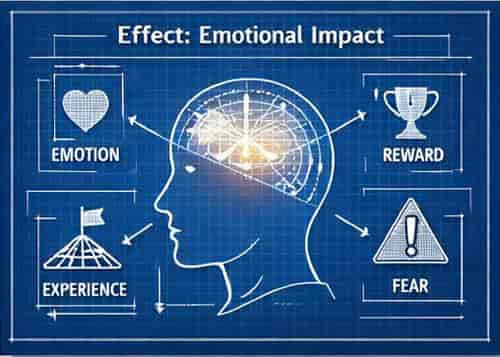
The Law of Effect states that learning associated with meaning, emotion, or consequence is remembered more strongly. Experiences that carry emotional weight—whether positive or negative—are encoded more deeply than neutral or abstract information. This law explains why stories are remembered more than statistics, why warnings linger longer than instructions, and why beliefs formed during emotionally charged moments often persist for a lifetime. While Scripture does not teach this as a psychological law, it consistently teaches through methods that engage meaning, consequence, and emotion, making this principle especially relevant for teaching and evangelism.
Explanation and Cognitive Basis
Modern cognitive science shows that memory is not purely logical. Emotional centers of the brain play a major role in what is remembered and what is forgotten. Emotion does not guarantee truth, but it guarantees retention.
Research demonstrates that:
- Emotion increases attention and focus
- Meaningful experiences receive stronger memory encoding
- Consequence reinforces recall
- Narrative contexts outperform abstract instruction
This explains why:
- Traumatic or joyful events are vividly remembered
- Stories shape worldview more effectively than arguments
- Beliefs tied to identity or meaning are deeply resistant to change
Scriptural Alignment (Supportive, Not Doctrinal)
Scripture repeatedly teaches through narrative, consequence, and meaning, reflecting an awareness of how the human heart and mind respond to truth. These patterns show that Scripture teaches truth in ways that engage the whole person, not just the intellect.
Key biblical patterns include:
- Story as primary teaching method
- Large portions of Scripture are historical narrative
- Parables and imagery
- Jesus regularly taught through stories that evoked reflection and emotion (Matthew 13)
- Consequences emphasized
- “See, I have set before you life and death.” (Deuteronomy 30:19)
- Memorialization
- Feasts, stones, and rituals used to preserve memory (Joshua 4:6–7)
- Warnings and promises
- Blessings and curses framed truth in terms of outcome
Implications for Believers
Effect reminds us that faith is not emotionless, but it must be truth-directed. The Law of Effect helps believers understand:
- Why emotionally charged sins linger in memory
- Why testimony and story strengthen faith
- Why worship involves music, ritual, and remembrance
It also cautions believers:
- Emotion alone is not a test of truth
- Powerful experiences must be grounded in Scripture
- Meaning must be aligned with reality
Implications for Evangelism
Evangelism that ignores meaning often fails to connect. Evangelism that relies only on emotion lacks stability. The law helps balance both. For evangelism, the Law of Effect is critical:
- People rarely change beliefs through logic alone
- Meaning and consequence frame openness
- Story creates space for reflection
- Testimony engages identity, not just intellect
This explains why:
- Jesus often told stories instead of arguments
- Personal testimony is powerful
- Abstract debate often fails to persuade
How to Teach the Law of Effect
This mirrors biblical teaching: truth framed by meaning. Effective teaching methods include:
- Use narrative – Stories contextualize truth
- Connect truth to consequence – Show why beliefs matter
- Engage identity – Address meaning and purpose
- Avoid manipulation – Emotion should serve truth, not replace it
- Anchor experience in Scripture – Interpret emotion through truth, not vice versa
The Law of Readiness
Summary
The Law of Readiness states that learning occurs most effectively when the learner is prepared and willing. Even accurate information, repeated clearly and meaningfully, will not be received if a person is resistant, distracted, or unwilling to engage. This law explains why truth can be plainly presented yet rejected, why the same message produces different responses in different people, and why timing matters in teaching and evangelism. While Scripture does not present this as a psychological rule, it consistently recognizes the role of openness, humility, and willingness in receiving truth.
Explanation and Cognitive Basis
Modern cognitive psychology recognizes that learning is not purely informational—it is volitional. Readiness involves attention, motivation, emotional state, and openness to change. Readiness does not guarantee acceptance of truth, but without it, learning rarely occurs. Research shows that:
- Resistance inhibits learning
- Motivation enhances retention
- Defensive frameworks block new information
- Readiness determines whether information is integrated or dismissed
This explains why:
- People defend beliefs even when evidence challenges them
- Emotional or identity-based resistance overrides logic
- Change often follows crisis, curiosity, or dissatisfaction
Scriptural Alignment (Supportive, Not Doctrinal)
Scripture consistently acknowledges that receptivity matters. The Bible describes hearing and understanding as dependent on the condition of the heart and mind. These passages do not teach a cognitive law but clearly reflect an understanding that readiness governs reception. Key biblical patterns include:
- Hearing requires openness
- “He who has ears to hear, let him hear.” (Matthew 11:15)
- Resistance blocks understanding
- “They seeing do not see, and hearing they do not hear.” (Matthew 13:13)
- Humility precedes wisdom
- “God opposes the proud but gives grace to the humble.” (James 4:6)
- Readiness affects reception
- “Today, if you hear his voice, do not harden your hearts.” (Hebrews 3:15)
- Different soils, different results
- Parable of the Sower (Matthew 13 – the devil took the seed of God’s word from those who did not understand!)
Implications for Believers
Readiness reframes learning as a posture, not just a process. The Law of Readiness helps believers understand:
- Why growth can stall despite good teaching
- Why humility is essential to learning
- Why spiritual maturity involves openness to correction
It encourages:
- Self-examination
- Teachability
- Patience with God’s timing
Implications for Evangelism
Evangelism is not about forcing readiness, but recognizing and responding to it. In evangelism, readiness is often the decisive factor:
- Not everyone is ready at the same time
- Resistance may be emotional or identity-based
- Pushing too hard can entrench opposition
This explains why:
- Jesus sometimes withdrew rather than arguing (Mark 1.21, Luke 4.30, John 6.15)
- Timing matters in gospel conversations
- Questions often open doors more effectively than assertions
How to Teach the Law of Readiness
This mirrors biblical evangelism: discern → respond → wait. Effective teaching methods include:
- Assess openness – Ask questions before instructing
- Remove obstacles – Address fears, misconceptions, identity concerns
- Create safety – Foster trust and respect
- Be patient – Allow time for reflection
- Respond to curiosity – Teach when interest is present
References
Educational Psychology & Learning Theory
Thorndike, E. L. – The Law of Effect (Simply Psychology)
Thorndike, E. L. – Educational Psychology (1914, Archive.org)
Overview of Classical Learning Theories (Simply Psychology)
Learning (Psychology) – Encyclopaedia Britannica
Memory, Retention, and Cognitive Science
Baddeley – Working Memory Model (Simply Psychology)
Memory Consolidation – National Center for Biotechnology Information (NCBI)
How Memory Works – American Psychological Association
Ebbinghaus Forgetting Curve Explained (Simply Psychology)
Neuroscience, Emotion, and Learning
Emotion and Memory Encoding – NCBI
How Emotion Influences Learning – Frontiers in Psychology
Why the Brain Responds to Storytelling – Scientific American
Learning Readiness & Resistance to Belief Change
Cognitive Dissonance Theory (Simply Psychology)
Confirmation Bias – Encyclopaedia Britannica
Why People Resist Changing Beliefs – Psychology Today
Neural Resistance to Belief Revision – NCBI
Classical Education & Historical Teaching Models
Classical Rhetoric and Memory – Stanford Encyclopedia of Philosophy
Apprenticeship Models in Education – Encyclopaedia Britannica
Oral Tradition and Learning – Encyclopaedia Britannica
Biblical Pedagogy (Supportive, Not Doctrinal)
Teaching Methods in the Bible – Bible Odyssey
Repetition and Remembrance in Scripture – Bible Gateway Blog
Discipleship as Formation – Zondervan Academic
Romans 12:2 Commentary – BibleHub
Science Studies – Foundations of Scientific Inquiry | StreetWitnessing.org
Leave a Reply
You must be logged in to post a comment.