

Evolution – Vestigial Organs
Table of Contents
“If it could be demonstrated that any complex organ existed [,] which could not possibly have been formed by numerous, successive [,] slight modifications [,] my theory would absolutely break down” – Charles Darwin, The Origin of Species: A Facsimile of the First Edition, Harvard University Press, 1964, p. 189
Overview – Vestigial Organs
Vestigial organs are commonly used as one of the most persuasive talking points for evolutionary theory. The claim is simple: certain structures in living organisms are said to be evolutionary leftovers—reduced remnants from earlier evolutionary stages that no longer serve a meaningful purpose today. This page examines the evidence behind those claims and asks whether “vestigial organs” genuinely support macroevolution, or whether the facts are better explained by designed function, undiscovered function, and biological degeneration (reduction) over time.
- Many “vestigial” claims collapse as functions are discovered.
- Even if real vestiges exist, they fit reduction/devolution far more naturally than upward-building innovation.
- A naturalistic model of constant transformation should leave behind massive biological clutter, but that is not what we observe.
- Several disputed structures may reflect designed function, undiscovered function, or biological decay rather than evolutionary leftovers.
Definitions
Before examining the evidence, we need to define terms. Evolutionary literature has often used “vestigial” in a way that assumes evolutionary ancestry, but definitions vary.
Dictionary definition (Dictionary.com, 2011):
Vestigial — “of certain organs or parts of organisms having attained a simple structure and reduced size and function during the evolution of the species.”
Science dictionary definition (American Heritage):
Vestigial — “Relating to a body part that has become small and lost its use because of evolutionary change.”
Clarification: In modern biology, “vestigial” often means reduced or modified relative to other species, not necessarily functionless. This matters because many structures labeled “vestigial” still perform important roles.
Mechanism & Expectations for Evolution
Evolutionary theory teaches that random genetic changes (mutations), filtered by natural selection, can gradually transform organisms from one form into another. Under that model, organs and limbs are said to be built up slowly over time, while older structures become reduced or discarded. A standard evolutionary illustration is the claim that fish fins gradually changed into legs over evolutionary history. Mutations are not directed toward future utility; selection can only preserve what already works, not engineer coordinated systems into existence.
If vestigial organs are being used as evidence for macroevolution, then we should ask a reasonable question: If organisms are constantly being “rebuilt” over time, what would we reasonably expect to observe?
Vestigial Organ Expected Evidence
We would expect to see things like:
- Unusable vestigial organs, limbs, or systems
- Incomplete vestigials
- Old decomposing, mostly unusable vestigials
- Newly forming vestigials
- Fully present structures that are useless in the current alleged stage
In other words: if the evolutionary model is correct, the living world should include massive evidence of leftover parts—either fading out from the past or emerging for the future. A good example of this model’s expectation is the evolutionary process of the fins of a fish through the process of evolution, which gradually changed into legs:

Evolutionary theory depends on a specific kind of mechanism to explain how new biological structures arise. Since the model rejects intelligent design, planning, or external guidance, it cannot appeal to foresight, intention, or goal-directed engineering. Instead, the only material mechanism available is undirected genetic change: random mutations, recombination, and variation occurring in DNA, with natural selection preserving whatever happens to be survivable or reproductively advantageous.
Under this framework, new organs and limbs cannot appear as complete functional systems all at once. They must arise through countless small genetic changes over time—each change producing some physical difference (however slight), with selection acting like a filter.
This means that if macroevolution is true, then the development of complex organs necessarily requires long chains of intermediate biological stages: partially forming structures, modified structures, fading structures, incomplete structures, and transitional arrangements that would leave visible evidence in anatomy and across living creatures. In other words, “vestigial organs” are not optional side evidence for evolution—they are the type of leftover evidence we should reasonably expect if evolution is the true mechanism responsible for building new functional organs through gradual, undirected genetic change.
Calculating Vestigial Probabilities
This section is illustrative. This is not a literal genetic model; it is a combinatorial illustration of why coordinated functional order cannot be treated as a simple product of undirected reshuffling. Evolutionary theory includes natural selection, but selection is not a creative mechanism. The only proposed source of novelty is undirected genetic change (mutations and recombination), with selection acting as a post-process filter. If new organs are ultimately produced by such undirected genetic trial outcomes, then the model predicts an abundance of nonfunctional intermediates, partial structures, and failed configurations. The rarity of such pervasive biological clutter remains a central difficulty for the vestigial argument.
That raises a serious question: Where are the vast numbers of failed organ attempts and biological clutter that such a process should produce?
Simple Gene Experiment
If we imagine, even conservatively, that a simple organism has 250 genes, and we treat those genes as small functional units with even minimal “word” encoding, the number of potential arrangements becomes astronomically large. Even in simplified form, the point stands:
- Complex functional structures require coordinated order, not just variation.
- If endless variation were constantly producing new organs and removing old ones, we should expect widespread biological disorder.
This becomes even stronger when we remember: This is only for one component of one organ—yet evolution must account for entire bodies of integrated systems.
Evolution of the Hand

To produce the kind of hand shown here through unguided evolution, undirected genetic variation would have to be sampled an unimaginable number of times — generating countless malformed outcomes — until one rare sequence finally produced five correctly formed fingers in the right arrangement, with functioning joints, tendons, nerves, and blood supply. This illustration represents only one structure. If the number of genetic “tries” required to assemble a working hand is already astronomical, then applying the same process to build an entire body of integrated organs and systems becomes a numeric impossibility. If evolution were true on this scale, organisms should be overwhelmed with biological clutter — unfinished structures, useless remnants, and transitional deformities. Instead, living creatures overwhelmingly display a fully functional, integrated design.
Observations & Visual Argument
The real-world problem for the vestigial argument
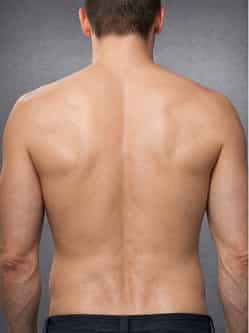
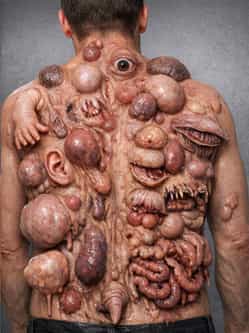
If the theory of evolution were true in the way it is commonly portrayed—continuous organic rebuilding from earlier stages—then living organisms should be filled with leftover structures. We should constantly see:
- Incomplete organs,
- Useless transitional parts,
- Leftover structures with no purpose,
- Half-formed systems waiting on future evolution.
But instead, what we observe in biology is the opposite: living organisms are functional systems, highly coordinated, highly integrated.
Historical Collapse of Vestigial Lists
Historically, many anatomy texts and popular science lists attributed large numbers of ‘vestigial’ organs to humans; over time, numerous items on those lists were reassigned functions as research progressed. This does not fit the expectation of endless leftovers.
If evolution were true in the way it is popularly taught, organisms should resemble a chaotic clutter of leftover parts—transitional states piled on transitional states—because the process would generate countless stages and remnants. Instead, we observe balance, symmetry, and purposeful integration.
Observation & Evidence:
The human body—and the bodies of creatures worldwide—consist of working systems. Structures are interconnected. Even “small” or “odd” parts often serve roles in stability, reproduction, immunity, and muscular attachment. The overall picture is not “leftovers.” It is a functional design. From an evolutionary standpoint, this creates a serious problem:
- Where are all the leftovers?
- Where are the newly forming features in our organs?
- Why doesn’t any creature show the vast number of transitional remnants the model requires?
A consistent implication of macroevolutionary construction through undirected mutation is that organisms should exhibit extensive morphological byproducts—structural remnants from prior configurations and partially emergent structures not yet functionally complete. When scaled across the entire body plan, this would predict a high prevalence of organisms containing numerous degraded, redundant, or incompletely integrated anatomical components.
Put plainly, one would expect many living organisms to display irregular and cluttered anatomies—assemblages of leftover and transitional structures—rather than the general biological pattern of coherent, functionally integrated systems. The limited number of strongly supported vestigial examples, and the repeated functional reclassification of supposed vestiges, weakens the claim that vestigiality provides straightforward confirmation of macroevolution.

Evaluation Principles
When evaluating vestigial-organ claims, three principles must be kept in mind:
- Designed adaptability exists. – An intelligent Designer can build organisms with variation built in—allowing adaptation within limits—without requiring macroevolution.
- An unknown function is not a non-function. – Human knowledge is limited. Declaring a structure “useless” has repeatedly backfired as science later discovers purpose.
- Decay and degeneration are real. – All biological systems are subject to corruption over time. Mutations often harm or reduce function. Reduction is expected under a fallen/decaying creation, and reduction does not logically prove upward evolutionary transformation.
Case Studies
For each case we will use: Claim → Observed function → Why “vestigial” is disputed
The Appendix

Claim:
The appendix is often presented as a leftover organ—no longer needed—kept only as a relic of evolution.
Observed Function:
The appendix is now known to be connected to immune function and is considered one site where immune responses can be initiated. It has been described as playing a role in supporting immune activity.
Why “Vestigial” is Disputed:
The entire vestigial claim collapses if the structure is functional. If the appendix contributes to immunity, the “useless leftover” label is not evidence-based—it is assumption-based.
In Regard to Removal of the Human Appendix – “Its removal also increases a person’s susceptibility to leukemia, Hodgkin’s disease, cancer of the colon, and cancer of the ovaries.”– In The Beginning Walt Brown p. 18
Human Tailbone (Coccyx)

Claim:
Evolutionary explanations commonly call the coccyx a leftover tail, used as proof that humans descended from tailed/tree-dwelling ancestors.
Observed Function:
The tailbone has major functional roles in human anatomy. It contributes to posture and acts as an anchor point for multiple muscles that are important in human movement and bodily function (including bowel-related muscular control).
Why “Vestigial” is Disputed:
Calling it a “tail remnant” ignores what it does. A structure can be reduced in appearance compared to another species and still be intentionally functional. Function defeats the “leftover organ” narrative.
Whale Pelvis
Claim:
Many textbooks claim whales have “hind limbs reduced to tiny internal bones that have no function.”
Observed Function:
These pelvic bones are involved in reproductive anatomy and muscular attachment. They are specifically structured for reproductive necessity and are not meaningless leftovers.
Why “Vestigial” is Disputed:
A reproductive functional structure cannot honestly be classified as “no function.” The claim becomes not science — but rhetoric. These bones are widely discussed in evolutionary literature as remnants; however, anatomical studies describe muscular attachments and reproductive associations.


“Modern whales have… hind limbs, which have been reduced to only a few tiny internal hind-limb bones that have no function.” – Holt Biology, 2001 p. 285
Snake Spurs (Rudimentary Hind “Legs”)

Claim:
Snakes are said to have remnants of hind legs from a time when they supposedly had legs in evolutionary history.
Observed Function:
These structures are important for reproduction and mating behavior, helping snakes position during mating. They are not “legs,” and their function aligns with reproductive design.
Why “Vestigial” is Disputed:
The label “hind legs” is misleading if the structure is not functioning as a limb. It becomes an interpretive story placed on top of anatomy, not anatomy leading to the story. Often described as ‘hind limb remnants’ in popular evolutionary explanations; however, they function as pelvic spurs used in mating behavior in certain species.
Scientific Observation
Vestigial organs are often used as a shortcut argument for evolution: “This looks reduced, therefore it must be a leftover.” But reduction is not proof of macroevolution—and function directly undermines the claim of “useless remnants.” The more science advances, the more so-called vestigial structures are shown to be functional, integrated, and necessary. Where reduction exists, it more naturally fits degeneration, adaptation within limits, or loss of original capability—not upward evolutionary innovation.
If organisms were constantly being rebuilt through random processes across countless stages, we would expect widespread biological clutter. Instead, what we observe is coordinated design: functional systems, purpose-driven anatomy, and structures that consistently reveal intention—not leftovers.
This pattern is precisely what a creation model would predict. Designed organisms should display coherent anatomical integration, with structures optimized for function rather than covered in transitional debris. The rarity of true functionless organs, the repeated discovery of purpose in alleged “vestiges,” and the overall absence of widespread biological clutter align far more naturally with intelligent design and original creation than with a trial-and-error mechanism operating over deep time. In short, the lack of pervasive vestigial “leftovers” is not a weakness for the creation view—it is a direct scientific observation consistent with it.
Vestigial Organ FAQ
Does vestigial mean “functionless”?
Not necessarily. In modern biology, it often means reduced or modified compared to other species, even when the structure still functions.
If something is reduced, does that prove evolution?
No. Reduction can fit degeneration, adaptation, or design variation. It does not automatically imply evolutionary ancestry.
Why do scientists call structures vestigial then?
Often because they assume evolutionary history as the interpretive framework. But a framework isn’t evidence.
Are any organs truly useless?
No organs have been conclusively demonstrated to be truly functionless in the strict sense (zero role under any conditions). Many “useless” labels have repeatedly been overturned as functions were discovered.
References
General Overview: Evolutionary Vestigial Claims – Answers in Genesis — “So-Called Vestigial Organs”
Darwin, Charles. On the Origin of Species (1st ed. facsimile). Harvard University Press, 1964. (Darwin’s falsification statement used in the opening quote.)
Bergman, Jerry & Howe, George. “Vestigial Organs” Are Fully Functional. (Monograph / compiled research; used for historical vestigial claims and functional reinterpretations.)
Scientific American (Nov. 2001), p. 84. (Referenced in relation to vestigial-organ discussion and changing interpretations over time.)
American Heritage Science Dictionary. Entry for “Vestigial.” (Definition showing the mainstream evolutionary framing.)
Dictionary.com. Entry for “Vestigial” (2011). (General-language definition reflecting evolutionary assumptions.)
Brown, Walt. In the Beginning, p. 18. (Appendix removal risks and health correlation claim; used as a secondary source requiring cautious phrasing.)
Appendix / immune function references: (General medical literature recognizes immune association; detailed immunology sources can be added as optional expansion.)
Leave a Reply
You must be logged in to post a comment.