

Creation Science – Science Studies – Consciousness
Studies in Neuroscience and Consciousness
– Select an Article –


Table of Contents
Overview of Consciousness
This subject is prefaced by the article – Fundamental Information Theory. The F.I.T article lays the groundwork for some of the concepts discussed in the article, regarding the fundamental nature of information. Even though consciousness in Biblical thinking is separate in various regards from information; the concepts in that theory will be helpful for understanding the separation in reality between the physical universe and the underlying concepts that build its structure. The F.I.T article is also useful to understand other point of view on this subject.
“… nowhere in the laws of physics or in the laws of the derivative sciences, chemistry and biology, is there any reference to consciousness or mind.”
– John Eccles – Neuroscientist – How the Self Controls its Brain, p.9
Definition of Consciousness
Consciousness is classically defined as the amount of awareness a person or system contains. Secular science is split between debating whether or not consciousness is emergence from a physical processes or is part of some fundamental source that correlates with information. Variations descriptions are as follows:
- Consciousness is a state ‘C’ that has intentionality or otherness, so it’s about something.
- A state in which a subject has private access, so one can have a third person descriptive knowledge of something physical. Your consciousness is accessible to you alone.
- A state ‘C’ is a state of consciousness just in case there is a ‘what it is like,’ to be in C. This gives each state a phenomenological texture, i.e. what it’s like to be happy, sad, in London, etc.
Biblically, consciousness is viewed as the ethereal part of you that is experiencing reality and is expressed synonymously with some terminology in discussions on the soul. In other words, consciousness is the awareness that the soul experiences, since man is a living being (or soul) that is spirit, mind and body (1 Thess 5.23). Consciousness being experienced by the mind (or soul or rather, you, your personal identity) who experiences reality either in the body or in the spirit.
Why the Experience of Consciousness
An interesting way to think about this is to consider the idea that if the mind was only the emergent product of the material universe (according to physicalists), it would seem most likely sentient beings would behave more like a robots, functioning as a system of inputs and outputs. Rather, we find that we have this abstract, allegorical internal seat from which we look outward into the world. Like watching a movie play out, that we get to be a part of. We experience what things are like, to feel pain, to desire to eat something sweet, the beauty of the color blue.
We have a will, are able to think, rationalize, and are self aware of all these complex concepts, we are even aware of being aware. We do this from an inward self-conscious position of awareness; all of which is not necessary in order to function in the universe, there is no reason that consciousness should be expressed the way that it is.
Axioms of Existence and Consciousness
Axioms are self evident truths, or concepts that are believed to be self evident. Concepts such as; I am aware of myself, and I can only be sure of is my own consciousness. The following lists five axioms about consciousness:
- Intrinsic Existence – our consciousness exists, independently of anything external. I know I am conscious and it continuation does not depend on other processes.
- Information – Consciousness differentiates (i.e. when we are not looking at an elephant, we know there is no elephant). We are able to understand, differentiating and organizing each aspect of an experience by the information perceived.
- Integration – Our consciousness is one unified experience. It is not fragments or separated into multiple conscious experiences. Our consciousness is one continuous experience since becoming aware of one’s self.
- Composition – Our consciousness is structured, we experience different things over space and time. Consciousness is not random or chaotic, but is organized so perception of reality is possible.
- Exclusion – there are boundaries of conscious experience, i.e. we are only conscious of the world in front of us. We truly cannot confirm any other consciousness experience besides our own.
Viewpoints of Consciousness
There are various viewpoints on consciousness in philosophy. There are various attempts to reconcile our understanding in science with consciousness, inevitably over time various problems have emerged. One problem in particular is the hard problem of consciousness, in regard to the relationship between the mind and body, it is known as ‘the mind body problem.’
Materialist View (Physicalism)
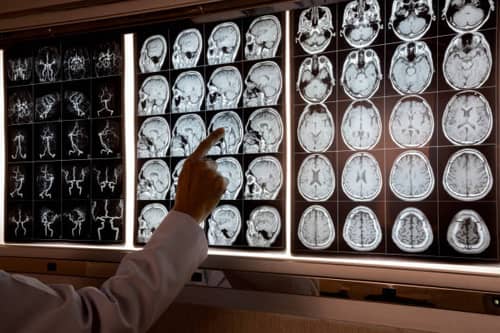
Materialists assert that consciousness is the by-products or epiphenomena of material processes. Materials believe nothing exists beyond the material universe, that all that exists is physical or a result of physical processes.
Dualist View
Dualism is the theory that consciousness and the mind are fundamentally different from the physical world. This philosophy theorizes not everything is fundamentally physical and things that are not fundamentally physical and are fundamentally mental or informational.
Panpsychism Theory
Holds that mind or a mind-like aspect is a fundamental and ubiquitous feature of reality. This would lead to the idea that all material has a mental or conscious aspect, no matter how rudimentary.
Alternatives Consciousness Theories
Integrated Information Theory, IIT is a proposed mathematic model for the consciousness of a system. It creates a framework to explain why some physical systems, like brains are conscious. It is a Complex theory of consciousness, proposed by theorists such as Carl Zimmer in scientific America article or 2012 book on consciousness – poses that a system is conscious if:
- It has the property ‘Phi,’ Phi corresponds to the feedback between and interdependent of different parts of a system, it is equated to synergy. It is the degree to which a system is more than the sum of its parts. Phi is the measurement of total consciousness.
- Next are the ‘conceptual structures’ which correspond to the manner in which information is embodied and processed in a particular system at a particular moment.
This theory would seem to suggest that consciousness can be produced when enough components are in place to produce it, i.e. a group of conscious beings could product a larger consciousness as they interact together. This occurs when ‘phi’ becomes great enough.
Immutability and Personal Identification
One important aspect when discussing consciousness is the aspect of ego, or self. The question arises if the conscious self is fundamentally alterable or is it immutable. Immutability is the concept of something that cannot be changed. Something immutable will exist forever in some particular state. Some theories in Quantum Mechanics support the idea that some things are immutable. Consciousness, pertaining to the eternal part of the soul, or perhaps better pertaining to the spirit, would be immutable. This is why God tells us that we will dwell forever in Heaven or Hell, and it is the person you are right now; you are the same personal right now that will dwell there forever.
Personal Identification in Consciousness
Can consciousness exist separate from your brain or can it be transferred, divided, destroyed or enhanced.
It is interesting to think about the fact that every 6 months or so, every cell in your body has underwent mitosis, split and the old cells have died. Every 6 months you have an entire new body. Are you a different person, or has some ethereal part of you (your personal identification) been transmitted over the years from cell to cell? Our intuition seems to tell us we are the same person we were when we first began to be aware of ourselves. Science tells us we have transmitted our existent many times over like new ‘parts,’ like the ship of Theseus!
Even if you copy your body perfectly, sub-particle for sub-particle, and downloaded your entire mind into this clone, it would still not be ‘you.’ Your unique ‘self-identity’ can only exist in you. A principle in quantum mechanics is Heisenberg’s uncertainty principle that details the ‘No Cloning Theorem’ – it states it is impossible to create an independent and identical copy of an arbitrary unknown quantum state. This can be used to support the concept of an immutable personal identification in your own consciousness.
Experiments in Consciousness
Multiple theories and experiments have been presented in the fields of philosophy, psychology and neuroscience in attempt to understand the phenomenon of consciousness. There have been many observations and experiments over the years that have lead to the controversial data causing scientists and doctors to speculate a non-physicalist interpretation of what consciousness is.
Implicit Memories
Implicit memories are memories that the conscious mind is not necessarily aware of. Performance habits and affected behaviors that occur over time as known as implicit or non-declarative memories. These automatic brain functions return us to the question, why do we experience consciousness at all. For if implicit memories are possible, than, according to a physicals perspective, it could be implied that the brain could have simply been a robotic system that functions based on inputs and outputs. There would be no necessary need for consciousness or self awareness to have developed.
Penfield Experiments
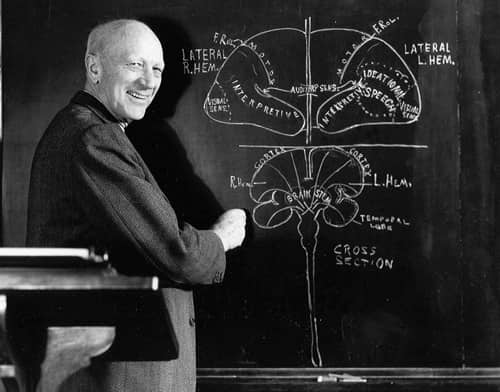
Wilder Penfield, neuroscientist, conducted many experiments in the field of consciousness. He could cause patients to involuntarily move body part, vocalize and even recall memories or even experience hallucinations, using an electrode. However, he could not get patients to act involuntarily, in other words he could not stimulate the will.
“There is no place in the cerebral cortex where electrical stimulation will cause a patient to behave or to decide… I am forced to conclude that there is no valid evidence that either epileptic discharge or electrical stimulation can activate the mind”
– Wilder Penfield, Neuroscientist – Mysteries of the Mind p.77-78
Non-Locality of Consciousness
Neuro-Plasticity
This concept suggests consciousness is not strictly tied to specific regions of the brain and may extend beyond the physical boundaries of the brain. It has been demonstrated that the brain has a remarkable ability to reorganize itself in response to injury or damage or in removal of parts of the brain. This is, a phenomenon known as neuroplasticity. In some cases, other regions of the brain may compensate for the loss of function in a particular area.
Minimum Neural Substrate is another conceptual point that supports the non locality of consciousness. There are a number of cases in which people have very minimal brain matter and are still able to have conscious experience.
Spilt Brain Patients
Split brain patients, whom have their corpus callosum severed, have conflicting data when experiments are ran by separating each side of the body, however the person is still able to function as a single person in everyday life. The patients do not report any perceptions of experiencing two consciousnesses, or a feeling of being two people. Their mind is still able to function in unison even though the brain may be processing information differently at different times.
Intentional Modification
Individuals are able to influence and change the chemical makeup within the brain. Neuroscientist Jeffery Schwartz, in The Mind and The Brain, demonstrates research on OCD patients. He found OCD patients had abnormal brain functions under brain scan examinations. However through intense mental effort, focus and revaluation, without any other treatment their brain scans revealed a realignment and rearrangement of their brain patterns, altering their brain circuitry. Consciousness and thoughts were able to change the chemistry in the brain; this is known as cognitive behavioral therapy.
This would indicate that the mind is a real ontological substance that can influence and change thing on its own, rather than being an emergent effect or property of the brain.
Mereology
Mereology or the study of parts and the wholes they form. Meaning when you cross a specified line, a sum of smaller sets becomes a new substance with new properties the smaller parts did not have. i.e. H2O molecules are not wet, however get enough of them together at room temperature and they gain a new attribute of being wet, as it becomes water.
This is an interesting topic in consciousness, as it would not seem that an individual neuron has consciousness, however it is the combination of them that creates a new thing, consciousness. Rather they are creating the organ (the brain) in which a consciousness is able to interact with the material world. Consciousness is able to act within the principles of information in the universe to interact with the physical.
Consciousness is interpreted as one intrinsic entity, not as different components, subsets or parasets; but as one individual consciousness.
Visual or Neural Binding Problem
Experiments have shown that the brain stores or perceives the color of an object in one part and the shape in another part. Then the question arises, where do brains combine information to form one unified perception of that object like we see in reality.
“There is now overwhelming biological and behavioral evidence tha the brain contains no stable, high resolution, full field representation of a visual scene, even though that is what we experience subjectively. The structure of the primate visual system has been mapped in detail and there is no area that could encode this detailed information. The subjective experience is thus inconsistent with neural circuitry.”
– Feldman J – The Neural Binding Problem. 2013 Feb;7(1):1-11. doi: 10.1007/s11571-012-9219-8.
No Biomarkers for Consciousness – N.D. Experiences
No biomarker for consciousness has ever been discovered. There is no known mechanism in the brain to detect consciousness. Neural Complexity accounts for the fact that the brain is a highly complex organ. Consciousness arises from interactions between different brain regions; however, consciousness is experienced long after the body has ceased functioning, as reported by millions of NDE patients. Memories of people who have been resuscitated, after both hearts and brain activity has ceased is evidence of this.
References
Can Integrated Information Theory Explain Consciousness? – Scientific American Blog Network
The neural binding problem(s) – PubMed (nih.gov)
Integrated Information Theory of Consciousness | Internet Encyclopedia of Philosophy (utm.edu)
Leave a Reply
You must be logged in to post a comment.