

– Heretical and False Religious System Articles –


Browse all related articles: View the Babel – Mother of World Religions article archive
Tower of Babel The Mother of World Religions and Origin of all False Belief Systems

Table of Contents
Overview
… before Abraham was, I am.
– John 8.58
Since the beginning, when God created humanity, He revealed Himself and His ways to all people (Romans 1:20–21). In addition to the witness God placed in every human heart, He also communicated through His servants to share His message with the world (Hebrews 1:1–3; “Where I am, there my servant is also” — John 12:26).
God also established covenants with those who had faith in Him; the first was with Adam (Genesis 1–3), and the next recorded in Scripture was with Noah (Genesis 6). Noah was a righteous man who shared God’s word with the world. When people did not listen and were destroyed, he continued to share God’s word with his children. Only three generations after Noah, Nimrod — Noah’s grandson — began to rebel against God and led the people in Shinar to build a tower intended to oppose God (Genesis 10). That was the location of the tower of Babel.
The Bible tells us that Nimrod was a mighty hunter before the Lord (Gen 10.8-12). The exact purpose of the tower is debated by scholars, but one thing is known it was an opposition to God’s purpose. This was either because God told the people to spread out over the earth, or because they were going to worship other gods (demons) on it. The tower was never completed because God confused their language, causing them to begin spreading out over the world (Gen 11.7).
Many ancient belief systems contain elements of monotheism or a supreme deity above other lesser deities. According to Scripture, over time the nations turned toward polytheistic systems of worship, which the Bible associates with idolatry and spiritual deception (Leviticus 17:14–16; Deuteronomy 32:17). As these nations drifted from God, God chose Abraham to be His messenger and to reveal His truth through Abraham’s descendants, the Israelites — at which point the covenant with Abraham was established.
Ancient Kings Reference Pre-Deluge Texts
There are historical references indicating that ancient kings possessed and studied texts believed to originate from a time before the Flood, possibly preserved through Noah or his descendants. In 1853, a significant inscription was uncovered by Hormuzd Rassam in the Library of Ashurbanipal at Nineveh, dating to the 7th century BCE.
“ I read the beautiful clay tablets from Sumer and the Akkadian writing, which is hard to master. I had the joy of reading inscriptions on stone from the time before the flood.”
– King Ashurbanipal, an ancient king of the Assyrian Empire
Original Divide of Cultures
When we examine archaeological findings, linguistic development, genetic studies, and historical records together, a consistent picture begins to emerge regarding the origins of the nations. These disciplines collectively indicate that early civilisations share a common point of dispersion, aligning with the biblical account of the Tower of Babel.
By tracing language families, population migrations, and early cultural traditions, we find that many ancient societies retain remnants of a shared origin. These remnants often include parallel religious concepts, similar symbolic structures, and common foundational myths, suggesting that humanity once possessed a unified belief system before being divided.
According to the biblical record, this shared origin traces back to Noah and his descendants after the Flood. The dispersion of peoples at Babel marks a pivotal moment in human history, where unified language, culture, and worship were fractured, giving rise to distinct nations, cultures, and belief systems—many of which preserved fragments of original truth alongside increasing distortion over time.

Japhetic Nations, Culture and Religions
The Japhetic nations are traditionally associated with peoples who migrated primarily into Europe and parts of Asia. These groups are linked to early Indo-European populations whose cultural and religious traditions later developed into many of the mythological systems known today.
Gomer is commonly associated with the Cimmerians and early Indo-European peoples who later settled regions corresponding to modern Germany, Spain, and the British Isles. These populations likely contributed to elements found in later Celtic and Norse mythologies.
Magog is linked to the Scythian peoples who settled north of the Caspian Sea. Their religious beliefs formed a pantheon that shows similarities to early Iranian and Vedic traditions.
Madai is traditionally associated with the Medes and early Indo-Aryan groups who initially lived south and east of the Caspian Sea. These populations later contributed to civilisations in the Indian subcontinent and participated in broader migration patterns across Asia.
Javan is associated with the Ionian peoples who settled in and around ancient Greece. Greek religious traditions later influenced the development of Roman mythology.
Tubal is linked to early Anatolian and Iberian peoples who settled south of the Black Sea, while Meshech is associated with populations that later contributed to Slavic cultural development.
Tiras is traditionally connected to the Thracians and related northern peoples, some of whom contributed to what later became Norse or Nordic mythological traditions.
Semitic Nations Culture and Religions
The Semitic nations are historically associated with the Near East and played a central role in the development of early civilisations, languages, and religious systems.
Elam is traditionally linked to the Persian peoples who settled along the Persian Gulf. One of the most influential belief systems to emerge from this region was Zoroastrianism.
Ashur is associated with the Assyrian people who settled between the Tigris and Euphrates Rivers. Their religious system formed one of the earliest structured Mesopotamian pantheons.
Arpachshad is associated with the Chaldean and Babylonian peoples. Babylonian religion incorporated and expanded upon earlier Sumerian beliefs, creating a complex religious system centred around deities such as Marduk.
Arpachshad is also the ancestral line through which Abraham emerged. God chose Abraham to preserve and proclaim the truth of the one true God, forming the foundation of the Hebrew people and later the nation of Israel.
Lud, Aram, and related Semitic groups settled throughout Asia Minor, Syria, and the Levant. Their belief systems were influenced by Mesopotamian religions, Baal worship, and surrounding regional pantheons.
Hamitic Nations Culture and Religions
The Hamitic nations primarily settled in Africa and parts of the Near East, contributing significantly to early civilisation, architecture, and religious development.
Cush is associated with the Ethiopian region and peoples who later interacted extensively with Babylonian culture. Their religious traditions included early forms of pagan worship.
Mizraim is linked to the Egyptian people who settled along the Nile River. Egyptian religion developed a vast pantheon centred around deities associated with the sun, death, fertility, and kingship.
Phut is associated with North African populations, particularly in the region of modern Libya, where indigenous Berber religious traditions developed.
Canaan is associated with the Canaanite peoples who settled along the Mediterranean coast. Their religious system was heavily influenced by Baal worship and included ritual practices that were later condemned in Scripture.
When God Divided the Nations
Some ask why did God destroy the Tower of Babel. According to Scripture, the division of the nations occurred at the Tower of Babel, when humanity united in rebellion against God. Rather than obeying God’s command to spread across the earth, the people sought to establish their own authority by constructing a tower intended to “reach into heaven.”
In response, God intervened by confusing their language, disrupting their unified communication, and scattering them across the earth. This act not only halted the construction of the tower but also marked the beginning of distinct nations, languages, and cultures.
So the Lord scattered them abroad from thence upon the face of all the earth: and they stopped building the city.
– Genesis 11.8
Scripture further explains that God apportioned the nations according to the number of the “sons of God” (bene-elohim), assigning the nations to spiritual rulers while reserving Israel as His own inheritance. This moment represents the origin of the world’s false religious systems, as humanity increasingly turned away from the one true God to follow lesser spiritual authorities.
Remember the days of old; consider the years of many generations; ask your father, and he will show you, your elders, and they will tell you. 8 When the Most High gave to the nations their inheritance, when he divided mankind, he fixed the borders of the peoples according to the number of the sons of God. 9 But the Lord’s portion is his people, Jacob his allotted heritage.
– Deuteronomy 32.7-9 (LXX)
The Nations Were Given the Sons of God
We see in verse 8 that God gave the all of the nations over to other ‘gods,’ (or the bene-Elohim i.e. or the hosts of heaven) that He divided the nations up according to the number of the sons of God, the same term used in Genesis chapter 6 for sons of God, the bene-Elohim. Deut 4 tells us that God had apportioned all other nations to be subject to the heavenly hosts, but Israel was His portion.
… when you look up to the sky and see the sun, the moon and the stars—all the heavenly array—do not be enticed into bowing down to them and worshiping things the Lord your God has apportioned to all the nations under heaven. 20. But as for you, the Lord took you and brought you out of the iron-smelting furnace, out of Egypt, to be the people of his inheritance, as you now are
– Deuteronomy 4.19-20
This would seem to be the indication when all false world religions began in the world, when mankind began to follow these false gods, rather than point to or being pointed to the one true God (Deut 32.16-17, 1 Corin 10.20).
These are the same gods (sons of God) or hosts of heaven seen and rebuked by the one true God in Psalms 82 and 89 for not fulfilling their roles given to them when God disbursed the nations. The so-called ‘gods’ failed to secure justice and protect the weak.
Ancient Cultures: Accounts of Babel & Religions
Because humanity was scattered suddenly at Babel, no single culture preserved the entire historical record of the event. Instead, fragments of the same foundational memory appear across civilisations worldwide. When these accounts are examined together, they form a coherent picture that closely parallels the biblical record.
As nations rose, fell, and conquered one another, languages evolved and religious systems shifted. Original beliefs were altered, merged, or distorted as cultures interacted. Deities were renamed, attributes reassigned, and traditions reshaped to fit regional identities. Over time, the original knowledge of the true God became increasingly obscured, though remnants of the original event persisted.
These shared memories—particularly stories involving a great tower, divine judgment, the confusion of language, and the scattering of humanity—appear independently across ancient cultures, reinforcing the historical credibility of the Tower of Babel as a real event in human history.
Babylonian Account of the Tower of Babel
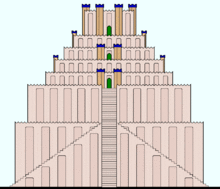
Archaeological discoveries from ancient Babylon provide strong extrabiblical testimony to the Tower of Babel. In 1917, German archaeologist Robert Koldewey uncovered a Babylonian inscription describing plans by King Nebuchadnezzar II to construct the Etemenanki, a massive ziggurat dedicated to the god Marduk.
The name Etemenanki translates to “Temple of the Foundation of Heaven and Earth” and dates to approximately 600–560 BCE. The structure is widely believed to represent either a reconstruction attempt or a cultural memory of the original Tower of Babel.
Later examination by scholars, including Dr. Andrew George, confirmed that this structure functioned as a religious tower designed to connect heaven and earth—precisely the purpose described in Genesis. Its location in ancient Babylon further supports its connection to the biblical narrative. Located about 90 km south of Baghdad in Iraq. It is believed that this was either a dedication or Nebuchadnezzar’s attempt to rebuild of the original tower of Babel.


Assyrian Account of the Tower of Babel
Excavations at the ancient city of Nineveh uncovered the Royal Library of Ashurbanipal, containing thousands of clay tablets documenting early history. Among these texts are accounts paralleling biblical events, including creation, the global Flood, and the confusion of languages.
One Assyrian fragment describes humanity united in rebellion against the chief god, constructing a great tower referred to as the “gateway to heaven.” The text recounts divine judgment, the destruction of the structure, the confusion of human speech, and the scattering of peoples—details strikingly consistent with Genesis 11.
These records demonstrate that the memory of Babel was preserved outside the Hebrew Scriptures and remembered as a real historical catastrophe caused by divine intervention.
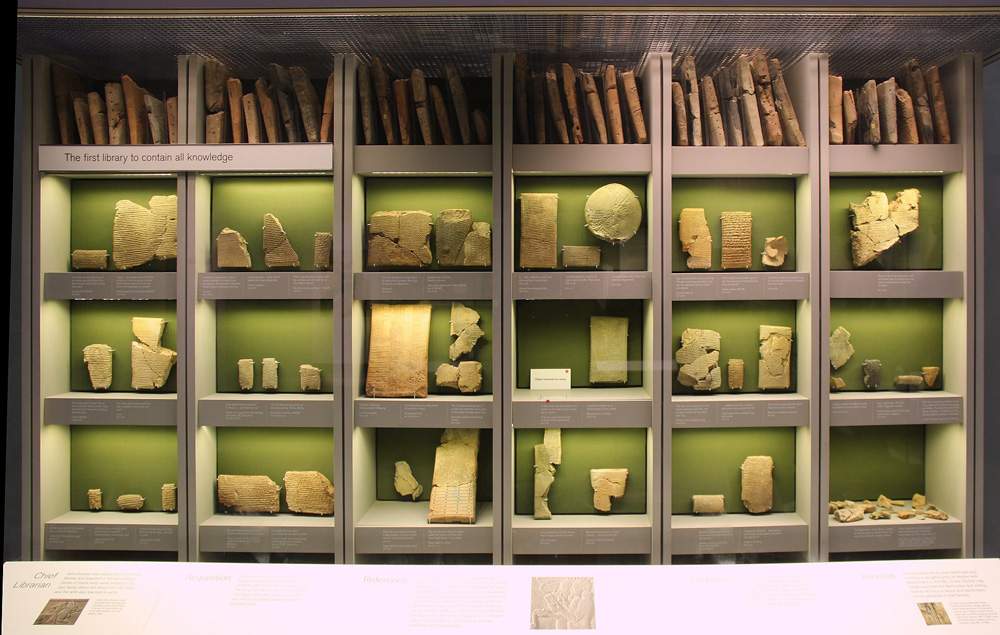
“[…] them? The father […] Of him, his heart was evil, […] against the father of all the gods was wicked, […] of him, his heart was evil, […] Babylon brought to subjection, [small] and great he confounded their speech. […] Babylon brought to subjection, [small] and great he confounded their speech. Their strong place (tower) all the day they founded; to their strong place in the night entirely he made an end. In his anger also word thus he poured out: [to] scatter abroad he set his face he gave this? command, their counsel was confused […] the course he broke
– Fragmented text found at Nineveh, Royal Library of Ashurbanipal
[…] fixed the sanctuary”
Sumerian Account of the Tower of Babel
The Sumerian legend of Enmerkar and the Lord of Aratta, dating to approximately the 21st century BCE, provides one of the oldest non-biblical references to language confusion. The story describes the construction of a temple and a subsequent divine act that disrupts unified human speech.
Though presented through mythological language, the account reflects a shared historical memory of a time when humanity spoke one language and was later divided by divine action.
The persistence of this theme in one of the earliest known civilisations strongly supports the conclusion that the Tower of Babel event predates later religious systems and was foundational to human history.


Greek and Roman Historians on the Tower of Babel
Ancient Greek historians also preserved accounts resembling the Tower of Babel. The historian Abydenus, writing around 200 BCE, recorded a tradition describing powerful humans who attempted to build a massive tower to reach heaven. According to his account, divine forces destroyed the structure, confused human language, and scattered humanity.
Herodotus, writing in the 5th century BCE, described Babylon’s tower as a massive structure with a spiralling ascent, further corroborating architectural descriptions consistent with ziggurat construction.
These Greco-Roman testimonies demonstrate that the Babel tradition was widely known across the ancient world, even among cultures far removed from the Hebrew Scriptures.
Chinese Characters point to the Tower of Babel
Ancient Chinese written characters preserve remarkable evidence of early biblical knowledge. Many characters incorporate visual components that correspond directly to Genesis narratives, including creation, the Flood, and the dispersion of nations.
The ancient Chinese concept of Shangdi—the supreme God of heaven—reflects an early monotheistic understanding. Animal sacrifices for sin were practiced, closely resembling biblical worship patterns.

DUST (Clay) + GRASS + PEOPLE (Mankind) + ONE + MOUTH (language)
The Chinese character for “tower” combines symbols representing clay, grass, humanity, unity, and speech, reflecting the Genesis description of the Tower of Babel. Similarly, the character for “migrate” conveys the idea of a great westward movement following a major division.
These linguistic artifacts provide compelling evidence that early Chinese civilisation preserved knowledge of Babel long before later philosophical and religious developments altered its meaning.
The Chinese word for Migrate is:

GREAT + WALK + WEST + DIVISION
This signifies that the story is about the Chinese people walking (or migrating) after a great division that occurs in the West.
Native American Tribes – Stories of the Tower of Babel
Indigenous oral traditions among Native American tribes contain striking parallels to the Tower of Babel. These accounts describe a time when all people spoke one language and attempted to build a structure reaching the sky, followed by divine judgment and linguistic division.
Such traditions, preserved independently across continents, further confirm that Babel was not an isolated Hebrew myth but a shared historical memory carried by migrating populations after the dispersion.
Choctaw Indians
The Choctaw people recount a tradition in which their Creator God formed all humans to speak one language. According to their oral history, people attempted to build a great mound or tower to reach the sky. Each night, the structure collapsed, and by the fourth day, the people could no longer understand one another and scattered into separate tribes.
Cherokee Native Tradition
Cherokee tradition tells of an ancient time when humanity constructed a massive tower to escape destruction from a great flood. Once the tower was completed, divine beings destroyed it, and the people were no longer able to communicate due to language confusion, resulting in their dispersion into distinct groups.
Ancient Monolithic Structures
Pyramidal and ziggurat-style structures appear across the ancient world, spanning continents and cultures that had no known contact in later historical periods. These structures share striking architectural similarities, suggesting a common origin rather than independent invention.
When humanity was scattered from Babel, the descendants of the original builders carried with them not only language and culture, but also architectural knowledge, religious symbolism, and construction traditions. As these people groups migrated outward from the Middle East, they reproduced what they remembered—monumental structures designed to connect heaven and earth.
If the Tower of Babel was constructed for religious purposes, it follows that its meaning, symbolism, and design would be preserved and transmitted through generations. This explains why nearly every major ancient civilisation possessed a central pyramid, ziggurat, or stepped temple reflecting the same foundational concept.
These structures were not merely civic monuments; they were religious centres tied to worship, sacrifice, and cosmology—further reinforcing their shared origin in post-Babel belief systems.


Ancient Technology used to create these structures remains a mystery. Details about how to move such massive granite blocks, how they were cut with such perfect precision and the laser accuracy of the bore holes and geometric angles just a few remarkable features that pose a problem even for modern technology.
Mother of all False World Religions
Scripture reveals that false religious systems did not arise randomly, but from a singular moment of rebellion against God. The Tower of Babel represents humanity’s first organised attempt to unify apart from God and establish an alternative spiritual authority.
In the book of Revelation, we are warned that in the last days a revived form of this ancient system will reemerge under the rule of the Antichrist. Whether this manifests as an entirely new religion or a reassembly of ancient belief structures, its roots trace directly back to Babylon.
Revelation identifies “Mystery Babylon the Great” as the spiritual mother of all false religions—an entity that corrupts nations, deceives rulers, and persecutes God’s people. This system embodies spiritual adultery by drawing worship away from the one true God and redirecting it toward counterfeit deities.
Return to the One World Religious system
Every false belief system, regardless of its outward appearance, ultimately shares this same origin: a rejection of God’s authority and a substitution of divine truth with deception.
1. “Come, I will show you the judgment of the great prostitute who is seated on many waters, 2 with whom the kings of the earth have committed sexual immorality, and with the wine of whose sexual immorality the dwellers on earth have become drunk.”…
4 The woman was arrayed in purple and scarlet, and adorned with gold and jewels and pearls, holding in her hand a golden cup full of abominations and the impurities of her sexual immorality. 5 And on her forehead was written a name of mystery: “Babylon the great, mother of prostitutes and of earth’s abominations.” 6 And I saw the woman, drunk with the blood of the saints, the blood of the martyrs of Jesus…
15 “The waters that you saw, where the prostitute is seated, are peoples and multitudes and nations and languages.
– Revelation 17. 1-2, 4-6, 15
God warns all believers everywhere to get out of her and forsake her and her ways, lest you get caught up in her iniquity and you are guilty of partaking in her sins.
“Come out of her, my people, lest you take part in her sins, lest you share in her plagues; for her sins are heaped high as heaven, and God has remembered her iniquities. Pay her back as she herself has paid back others and repay her double for her deeds; mix a double portion for her in the cup she mixed. As she glorified herself and lived in luxury, so give her a like measure of torment and mourning, since in her heart she says, ‘I sit as a queen, …
– Revelation 18. 4-7a
Similarities between Ancient False Religions
When ancient religious systems are examined side by side, consistent patterns emerge. Despite differences in names, regions, and symbolism, these religions share core elements that point to a common source rather than independent development.
These similarities include celestial worship, fertility rituals, hierarchical pantheons, sacrificial systems, and moral distortions that reflect rebellion against God rather than devotion to Him.
Scripture explains that these systems were inspired by fallen spiritual beings—referred to as demons—who sought worship for themselves after humanity rejected God’s rule. Over time, these influences produced religious traditions that mimicked divine truth while corrupting its meaning.
Worship of the Sun God
One of the most consistent features across ancient religions is the worship of a supreme male deity associated with the sun, lightning, or heavenly power. This figure was often portrayed as the bringer of light, knowledge, or civilisation.
Lucifer—whose name means “light-bearer”—has repeatedly presented himself as a source of enlightenment, disguising deception as wisdom. As a result, many ancient cultures associated their highest deity with solar imagery or celestial authority.
Scripture identifies Satan as a deceiver who masquerades as an angel of light. The widespread presence of sun worship across civilisations reflects this strategy: redirecting worship from the Creator to created things
“How art thou fallen from heaven, O Lucifer, son of the morning! [how] art thou cut down to the ground, which didst weaken the nations!”
– Isaiah 14:12:
The name Lucifer means the bearer of light or light bringer.
“I saw Satan fall like lightning from heaven “
– Jesus Luke 10. 17
Satanists have used the lightning bolt as a symbol for the devil for a very long time.
Queen of Heaven
Alongside sun worship, ancient religions almost universally included the veneration of a supreme female deity—often referred to as the Queen of Heaven. This figure was typically associated with fertility, sexuality, motherhood, and divine authority.
Though her name varied across cultures, her attributes remained consistent. She was commonly portrayed as the consort or mother of the chief god and was often linked to ritual sexuality, fertility rites, and temple prostitution.
Scripture explicitly condemns the worship of the Queen of Heaven, identifying it as a practice that provoked God’s judgment. Despite this, her veneration persisted across civilisations, demonstrating the enduring influence of Babel’s spiritual legacy.
| Religion | Supreme Goddess | Attributes |
|---|---|---|
| Ancient Sumerian | Inanna | Queen of Heaven. Goddess of Love and War, attributed to Venus. |
| Akkadian | Ishtar | Queen of Heaven. Goddess of Love and War, attributed to Venus. |
| Ugaritic, Syrian Religions | Anat | Goddess of hunting, warfare, ally of Baal. |
| Egyptian Mythology | Isis | Queen of Heaven. |
| Egyptian Mythology | Nut | Goddess of the sky, stars and cosmos. |
| Northwestern Semitic Religions | Astarte | Queen of Heaven. Fertility, sexuality, war |
| Semitic Religions | Asherah | Mother goddess, queen of heaven. |
| Greek Mythology | Hera | Queen of the gods, wife of Zeus |
| Roman Mythology | Juno | Queen of the gods, wife of Jupiter |
| Roman Mythology | Venus | Goddess of love |
| Chinese Mythology | Mazu | Empress of Heaven |
| Canaanite and Phoenician | Ashtoreh | Queen of Heaven. Goddess of Love and War, attributed to Venus. |
| Greek Mythology | Artemis | Goddess of nature, hunt, children the moon. Personified as the mother goddess. |
| Roman Mythology | Diana | Goddess of nature, hunt, children the moon. Personified as the mother goddess. |

The Queen of Heaven has been worshipped as Semiramis, Ashtoreth, Astarte, Ishtar, Venus, Artemis (of the Ephesians), and Diana, and in Roman Catholicism, Miriam or Mary, the mother of Jesus.
The children gather wood, and the fathers kindle the fire, and the women knead their dough, to make cakes to the queen of heaven, and to pour out drink offerings unto other gods, that they may provoke me to anger.
– Jer 7.18
Obelisks and Temple Prostitution
Obelisks were prominent features in many ancient religious systems and were commonly associated with fertility symbolism. These structures often functioned as phallic representations tied to sexual rites and fertility worship.
Temple prostitution was a widespread practice within these systems, merging religious devotion with sexual immorality. Such practices appealed to human desire while simultaneously binding worshippers to spiritual deception.
Scripture repeatedly warns against these practices, identifying them as tools used by demonic forces to enslave humanity through corruption of both body and spirit.
Astrology
Astrology played a central role in many ancient belief systems. Celestial bodies were worshipped, consulted, and feared as divine forces governing human destiny.
While Scripture affirms that the heavens declare the glory of God, it strictly forbids the worship of stars, planets, or heavenly hosts. Astrology represents a distortion of God’s creation—turning signs meant to glorify the Creator into objects of worship.
Over time, what may have begun as an acknowledgment of God’s order in creation was corrupted into divination practices that attributed divine authority to created things rather than the Creator Himself.

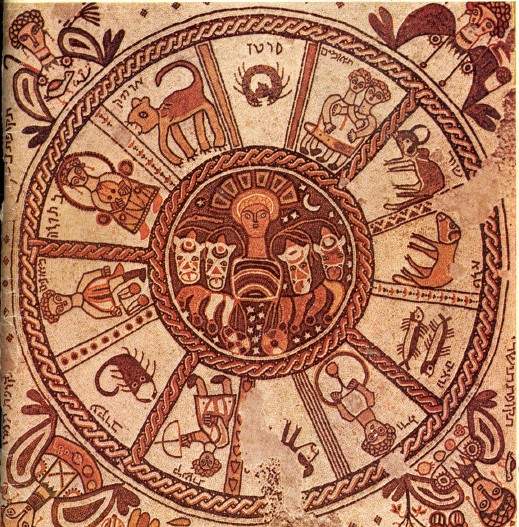
And when you look up to the sky and see the sun, the moon and the stars—all the heavenly array—do not be enticed into bowing down to them and worshiping things the Lord your God has apportioned to all the nations under heaven
– Deut 4.19
It has been proposed that in ancient times God wrote the gospel in the stars, attributing Ps 19.1 that the heavens declare the glory of God and proclaim (or tell) of His handiwork. How do they tell of His handiwork? Is this verse more than an allegorical statement? The Gospel in the Stars proposal states that God wrote in the constellations His plan of salvation and the gospel message; over time, its meaning was corrupted by pagan beliefs into an astrological symbolism.
This proposal needs more research or discovery before it can be definitively attributed to pre-ancient cultures.
Similarities between ancient religions and Judaism or Christianity
As archaeological discoveries increase, scholars continue to note similarities between ancient religions and biblical faith. These parallels do not suggest that Christianity borrowed from paganism, but rather that humanity originally possessed knowledge of God that later became corrupted.
God revealed His plan of redemption early in human history, beginning with Adam and continuing through Noah. As Noah’s descendants spread across the earth, fragments of this original revelation were preserved—even as they were distorted by false worship.
Christianity represents the fulfilment of God’s original revelation, not an adaptation of pagan mythology. The similarities that exist reflect shared origins, not shared authority.
Supreme Male Deities
Nearly every ancient culture recognised a supreme male deity ruling over heaven. While these figures differed in name and narrative, they often shared attributes such as authority, power, judgment, and control over the cosmos.
Scripture explains that Satan sought to exalt himself above God and receive worship that belonged only to the Creator. As a result, many ancient deities reflect distorted imitations of God’s true nature.
Rather than pointing humanity toward the true God, these figures diverted worship toward created beings—fulfilling Satan’s long-standing objective to deceive the nations.
| Religion | Supreme Deity | Attributes |
|---|---|---|
| Judaism | Yahweh | Eternal, All-powerful, All-knowing, All-present, Above all. |
| Christianity | Yahweh (now revealed in 3 people – Father, Son Holy spirit) | Eternal, All-powerful, All-knowing, All-present, Above all. |
| Islam | Allah | Originator and preserver of all creation. The absolute one, eternal and all powerful. Cannot be incarnated. |
| Baha’i Faith | Bana | The one supreme being, personal god, unknowable, inaccessible, source of all revelation. Eternal and almighty. |
| Mandaeism | Hayyi Rabbi | The Great Living God, Supreme God from whom all things emanate. Gnostic beliefs said to have branched from John the Baptist. |
| Philistine and Semitic Religion | Baal | Storm and lightning god, and god of fertility |
| Sumerian, Canaan Religions | Hadad | Storm and fertility god |
| Ugaritic, Phoenician, Syrian, Akkadian Religion | El | god or deity. Head of some Canaanite and Ugaritic beliefs. |
| Zoroastrianism | Ahura Mazda | Supreme god of good and benevolence |
| Hinduism | Para Brahman | The Supreme Brahman (universal principle) beyond all description or conceptualizations. Eternally pervades everything, everywhere in the universe and beyond. |
| Hinduism, Jaina, Buddhism | Indra | King of devas and heaven. Associate with sky lightning, weather, storms and war. |
| Ancient Vedic, Dravidic | Varuna | Creator god, one great over all. An ethical god able to forgive sins. Prehistoric Vedic sky god closely related to a type of monotheistic belief |
| Sikhism | Waheguru | Teacher, guide or god. Wondrous lord. |
| Greek (Roman) Mythology | Ouranos or Uranus (Caelus) | The personification of the sky, primordial deity. Father of the titans and grandfather of Zeus. |
| Greek (Roman) Mythology | Zeus (Jupiter) | King of the gods, god of thunder and sky. Son of Chronos, grandson of Ouranos or Uranus |
| Egyptian Mythology | Amun-Ra | God of the Sun, fertility and creation, chief important deity. Hidden or invisible one. A type of trinity existed between Amon, Re and Ptah. |
| Chinese Mythology | Shangdi | The supreme Deity or Highest Deity. Absolute god. |
| Chinese Mythology | Pangu | Primordial being who separated heaven and earth. Separated yin and yang with an axe, depicted as a hairy giant with horns. When he died his body parts because the part of the Sun, Moon and the earth. May have been preceded by Shangdi. |
| Sami and Finnish | Jubmel or Ibmel | Superior deity and ruler of the cosmos. Giver of life and god of fertility. Symbolized as a trinity with a mother deity and a son deity. |
| Slavic (Croatian) Mythology | Rod | Supreme god of fertility, ancestors and fate. He was the Judge. |
| Rotuman (Fijian Islands) | Tagroa Siria | God the Highest, God Above. Most powerful of deities in the Rotuman pantheon. Lived in underworld spirit region. Had a role in the fertility cult. |
| Finish, Estonian mythology | Ukko | Thunder, sky, harvest god, dwells in heaven. Wielder of hammer or axe similar to Thor. |
| Norse, Germanic | Odin | Father of the gods, god of wisdom, knowledge, victory and power. |
And the great dragon was thrown down, the serpent of old who is called the devil and Satan, who deceives the whole world; he was thrown down to the earth, and his angels were thrown down with him.
– Rev 12.9
In Isaiah we see that the Devil has continually made it his goal to ascend to heaven, sit above God, and make himself like God. In his pride, he has desired the worship of God’s created being since the beginning.
How you have fallen from heaven, morning star, son of the dawn! You have been cast down to the earth, you who once laid low the nations! 13 You said in your heart, “I will ascend to the heavens; I will raise my throne above the stars of God; I will sit enthroned on the mount of assembly, on the utmost heights of Mount Zaphon.[14 I will ascend above the tops of the clouds; I will make myself like the Most High.” 15 But you are brought down to the realm of the dead, to the depths of the pit.
– Isaiah 14. 12 – 15
We have another agent who works to corrupt the image of God. The Apostle Paul tells us in Romans Chapter 1 that as the hearts of people become corrupt, they exchange the glory of God for the image of corruptible man and beast. So not only does the Devil work to corrupt God word, so does immoral man, who works to make God in his own image or like the image of a corruptible beast.
Traditions of a Supreme Creator Among Isolated and Non-Urban Peoples
Across the world, numerous non-urban and historically isolated peoples have preserved traditions centred on a supreme creator, high god, or sky-father that stands above lesser spirits, ancestors, or divine intermediaries. Even within the reconstructed Proto-Indo-European linguistic tradition, scholars identify Dyēus Ph₂tēr, the primordial “Sky Father,” as a common ancestral figure from which Zeus, Jupiter, and related deities later developed. While these traditions differ substantially from one another and are not uniformly classified as strict monotheism, many scholars have noted the remarkable recurrence of a remote, morally authoritative creator who exists above the ordinary spiritual world.
This phenomenon formed the basis of the theory of Urmonotheismus (“original monotheism”), advanced most notably by Wilhelm Schmidt and discussed by figures such as Andrew Lang and Colin Turnbull. Although some contemporary anthropologists debate these ideas, the widespread preservation of supreme-creator traditions among geographically isolated peoples remains an important discovery and consideration in discussions concerning the earliest forms of human religion.
Non-Urban Peoples Supreme Creator Table
| People / Group | Location | Deity | Summary |
|---|---|---|---|
| Selk’nam People | Tierra del Fuego, southern South America | Temáukel (Témaukel) | A remote, transcendent being “above all,” creator and moral authority. Worship emphasized reverence and prayer rather than idols, temples, or priesthood. |
| Mbuti People | Congo rainforest, Central Africa | The Forest / Tore | The forest itself was understood as a singular life-giving and morally ordering presence. Ritual life centered on song and communal harmony rather than a developed pantheon. |
| Andamanese Peoples | Bay of Bengal | Puluga | A supreme sky-being and creator associated with moral order, judgment, and the origin of humanity. Early accounts emphasize his uniqueness above lesser spirits. |
| Karen People | Burma (Myanmar) and Thailand | Y’wa (Ywa) | A singular creator who originally gave humanity divine knowledge that was later lost. Oral traditions preserved expectations of a future restoration of that knowledge. |
| San People | Southern Africa | ǃXu / ǃKhwa (regional traditions) | Many San traditions preserve a high creator or sky-being who established the world and moral order, while later traditions incorporated additional spiritual figures and mythic beings. |
| Proto-Indo-Europeans | Eurasian Steppe | Dyēus Ph₂tēr (“Sky Father”) | The reconstructed ancestral sky-father from which Zeus, Jupiter, Dyaus Pitar, and related figures descend linguistically. Though later traditions became polytheistic, the supreme heavenly father remained foundational. |
| Yoruba People | Nigeria and Benin | Olódùmarè (Olorun) | Supreme creator and source of all existence. Lesser divine beings (orishas) function as intermediaries, but ultimate sovereignty belongs to one transcendent God. |
| Dinka People | South Sudan | Nhialic | Creator and ruler of heaven, giver of life, rain, and moral order. Other spirits exist, but Nhialic stands above them as supreme. |
| Maasai People | Kenya and Tanzania | Enkai (Engai) | One supreme deity associated with creation, fertility, rain, justice, and providence. Enkai possesses both benevolent and disciplinary aspects but remains singular. |
| Ainu People | Hokkaido, Sakhalin, Kuril Islands | Kotan-kar-kamuy | Regarded in some traditions as the creator or heavenly ruler above the many kamuy (spiritual beings), preserving a distinction between a supreme source and subordinate powers. |
| Algonquian Peoples | Northeastern North America | Gitche Manitou (Great Spirit) | A supreme, all-encompassing spiritual power associated with creation, life, and moral order, standing above other spiritual beings. |
| Lakota People | Great Plains, North America | Wakan Tanka | The “Great Mystery” or supreme sacred reality underlying creation. While expressed through multiple manifestations, many interpreters understand it as a unified divine source. |
| Australian Aboriginal Traditions | Australia | Baiame (among several groups) | In southeastern Australia, Baiame is remembered as an eternal sky-father, lawgiver, creator, and moral authority who established human customs and sacred obligations. |
| Mongolic Peoples | Mongolia and Central Asia | Tengri | Eternal Heaven, supreme ruler of destiny and kingship. Other spirits and ancestors existed, but Tengri occupied the highest and most universal position. |
Ask Our AI About Babel: The Origin of World Religions
Use our AI-assisted search to examine the Tower of Babel and its role in the formation and divergence of world religions, belief systems, and philosophical worldviews.
References
The Center for Messianic Learning – Mystery of Babylon the Great
Ancient Pages – Story of Babylon told by the Choctow Indians
Apologetic Press – The Ancient Origins of Hinduism
Ancient Origins – Assyrian Account of the Tower of Babel
Answers in Genesis – Account of Pre-Deluge Statement by Ancient Assyrian King