

Evolution – Fossils and the Fossil Record
Table of Contents
Overview – What is the Fossil record
The fossil record refers to the collection of fossilized remains, impressions, and trace evidence preserved within sedimentary rock layers throughout the Earth. These fossils include bones, shells, imprints, tracks, burrows, and occasionally soft tissues or biomolecular remnants. Together, they form a dataset used to infer aspects of past life and geological history. However, the fossil record is not a complete or continuous archive of all organisms that have ever lived. It is a highly selective record shaped by physical, chemical, and environmental constraints that govern whether an organism can be preserved at all. This limitation is widely acknowledged within mainstream geology and paleontology.
Key Scientific Observations from the Fossil Record
- Fossilization requires rapid burial and specific chemical conditions, making it incompatible with slow, incremental sediment accumulation in most environments.
- Fossil-bearing strata commonly contain mass graveyards, articulated skeletons, and laterally extensive sediment layers indicative of high-energy depositional events.
- Major biological groups appear abruptly in the fossil record and typically persist with minimal anatomical change (stasis).
- Continuous, stepwise transitional fossil chains linking major body plans are not consistently preserved.
- Index fossil ranges are frequently revised as new discoveries extend organisms earlier or later than originally predicted.
- Fossil dating relies on interpretive frameworks that integrate stratigraphy, radiometric assumptions, and correlation models.
- Catastrophic processes provide a coherent explanation for many large-scale fossil and sedimentary features observed globally.
Historical Origins of Fossil Record Interpretation

The modern interpretation of the fossil record did not arise from fossil evidence alone. Instead, it developed within a specific historical and methodological framework established during the late 18th and early 19th centuries—before the fossil record was well populated and long before modern sedimentology and taphonomy were understood.
At its foundation, the debate was not primarily between creationism and evolution, but between two competing geological models: catastrophism and uniformitarianism. Early naturalists and geologists observed that many rock layers and fossil assemblages appeared to reflect rapid, high-energy depositional events, including mass burial, extensive sediment transport, vertically stacked strata, and fossil graveyards covering wide geographic regions. These observations aligned naturally with catastrophic processes capable of reshaping large portions of the Earth in relatively short periods of time.
During the early 19th century, however, Charles Lyell advanced the principle of uniformitarianism, arguing that geological change occurred primarily through slow, continuous processes operating at relatively constant rates over vast spans of time. This approach emphasized gradual sediment accumulation and minimized the role of large-scale catastrophes, not because catastrophic processes were disproven, but because they were viewed as scientifically unnecessary within Lyell’s methodological framework.
Lyell’s model became the foundation for the emerging geologic column, in which sedimentary rock layers were arranged into a linear, time-based sequence assumed to represent hundreds of millions of years of Earth history. Once this structure was established, fossils were interpreted in direct correlation with stratigraphic position: deeper layers were assumed to be older, higher layers younger, and fossil assemblages within those layers were assigned relative ages accordingly.
Charles Lyell’s geological framework, most famously articulated in Principles of Geology (1830–1833), argued that Earth’s geological features were formed primarily through slow, gradual processes operating uniformly over vast spans of time. This philosophy—known as uniformitarianism—was not derived from the fossil record itself, but was instead a methodological assumption: the present was assumed to be the key to the past, operating at roughly constant rates. By the time fossil discoveries accelerated later in the 19th century, they were already being interpreted through a deep-time lens that had been established in advance.
Within this framework:
- Large-scale catastrophes were minimized or dismissed
- Rapid sedimentation was viewed as anomalous
- Long geological ages became a necessity, not a conclusion
Darwin and Fossils as Supporting Evidence—Despite Gaps

Charles Darwin adopted Lyell’s geological assumptions wholesale. Deep time was essential to Darwin’s theory of biological evolution, since gradual change by natural selection would require immense spans of time. Importantly, Darwin did not derive his theory from the fossil record. Instead, fossils were expected to eventually confirm common descent once enough specimens were found. Darwin openly admitted, however, that the fossil record available even in his time did not display the expected continuity of gradual transformation. Rather than reconsidering the framework, Darwin attributed these gaps to:
- Incompleteness of preservation
- Erosion of ancient layers
- Limited fossil discovery
The evolutionary trees that adorn our textbooks have data only at the tips and nodes of their branches; the rest is inference, however reasonable, not the evidence of fossils.” – Stephen Jay Gould, HarvardUniversity, Evolution’s Erratic Pace Natural History”, Vol. 5 (May 1977)
This explanatory move allowed the fossil record to be treated as supportive in principle, even when contradictory in practice. As paleontology developed, fossils were slotted into a pre-existing geological timescale rather than being allowed to independently define Earth history. Rock layers were dated by fossils, fossils were dated by rock layers, and both were interpreted through evolutionary assumptions—a process that later critics would identify as methodologically circular. This does not imply intentional bias, but it does demonstrate that:
- Fossil interpretation has never been philosophically neutral
- Geological and biological assumptions preceded the data
- Alternative explanations (such as large-scale catastrophism) were largely excluded early on
Understanding this historical context is essential. It explains why sudden appearances, mass burial layers, and fossil stasis were long treated as anomalies rather than as primary features demanding explanation. A more detailed historical analysis of these philosophical foundations—including the development of Darwinian evolution and its geological assumptions—can be found here:
👉 History of Darwinian Evolution
Fossil “Records” — Interpretation Is the Dispute
The existence of fossils is not contested. Fossils are real, observable, and extensively distributed physical objects embedded within sedimentary rock layers across the globe. They represent the preserved remains or traces of once-living organisms and are studied by paleontologists, geologists, and biologists across a wide range of scientific disciplines. The central disagreement surrounding the fossil record is not whether fossils exist, but how they should be interpreted—specifically with regard to timescale, mechanism, and historical reconstruction. From its earliest formulation, evolutionary theory has acknowledged that the fossil record does not present a smooth, continuous sequence of gradual biological transformation. Charles Darwin, while proposing common descent, openly recognized this problem:
“Why then is not every geological formation and every stratum full of such intermediate links? … This, perhaps, is the most obvious and serious objection which can be urged against my theory.”
— The Origin of Species, 6th ed., 1902
This admission is significant, not as a rejection of evolution by Darwin himself, but as an acknowledgment that the fossil record—by its own data—does not naturally display the gradual, continuous transitions that evolutionary theory predicts. Decades later, leading paleontologists continued to recognize the same tension between evolutionary expectations and fossil evidence. Stephen Jay Gould, one of the most influential evolutionary thinkers of the 20th century, wrote:
“The evolutionary trees that adorn our textbooks have data only at the tips and nodes of their branches; the rest is inference, however reasonable, not the evidence of fossils.”
— Natural History, May 1977
In response to this problem, evolutionary biology introduced models such as punctuated equilibrium, which propose long periods of stasis interrupted by rapid bursts of change. While this framework attempts to account for the fossil data, it simultaneously concedes that stasis and sudden appearance, not gradual transformation, dominate the fossil record.
Creationist models likewise accept fossils as real data, but interpret it through a different historical and geological framework—one that emphasizes rapid burial, catastrophic sedimentation, and limited biological variation within created kinds rather than deep-time gradualism. This distinction is foundational. Any meaningful discussion of fossils must first separate data from interpretation, recognizing that fossils themselves do not come labeled with timelines or mechanisms. Those are imposed by the worldview and assumptions brought to the evidence. Thus, both evolutionary and creationist models accept the reality of fossils. The disagreement lies in:
- Timescale (millions of years vs. rapid deposition),
- Mechanism (random mutation and selection vs. design and degeneration),
- Historical interpretation (gradual continuity vs. catastrophic events).
Fossilization Is Exceptionally Rare
Under ordinary conditions, living organisms do not become fossils.
After death, organic material is rapidly destroyed by:
- Scavengers
- Microbial decay
- Oxygen exposure
- Weathering and erosion
- Mechanical disruption
For fossilization to occur, an organism must escape these processes almost immediately. This requires rapid burial, typically in sediment-rich environments such as floods, underwater landslides, volcanic ash falls, or high-energy depositional events.
As a result, the fossil record is strongly biased toward:
- Hard-bodied organisms (bones, shells, exoskeletons)
- Aquatic or near-shore environments
- Organisms living in sediment-rich regions
Soft-bodied organisms, terrestrial animals, and organisms living in erosional environments are vastly underrepresented—or entirely absent—from the fossil record.
Taphonomic Bias and Selective Preservation
The study of what happens to organisms after death and before fossilization is known as taphonomy. Taphonomic processes determine:
- Whether an organism is preserved
- How completely it is preserved
- Where it is preserved
- In what condition it is preserved
Because these processes are selective, the fossil record does not function like a neutral “recording device” of history. Instead, it represents a filtered outcome shaped by environmental conditions, burial rates, sediment chemistry, and post-depositional disturbance.
This means that:
- Absence of fossils does not necessarily indicate absence of organisms
- Presence of fossils does not indicate continuous existence over time
- Fossil distribution patterns require interpretation, not mere observation
Fossils Do Not Contain Inherent Timelines
Fossils themselves do not encode:
- Absolute ages
- Evolutionary relationships
- Ancestral-descendant links
Those conclusions are derived by correlating fossils with:
- Stratigraphic position
- Index fossils
- Radiometric dating
- Evolutionary models
This distinction is critical. The fossil record provides physical data, but the meaning assigned to that data depends on interpretive frameworks—particularly assumptions about deposition rates, environmental stability, and the uniformity of geological processes over time.
Why These Limitations Matter
The theory that explains fossils must first account for the absence, discontinuity, and sudden appearance patterns that dominate the record itself. Understanding what the fossil record is not is therefore just as important as understanding what it contains. This sets the stage for examining how fossils form, how quickly they can form, and what large-scale fossil patterns actually show—topics addressed in the following sections. Because fossilization is rare, selective, and environmentally constrained, any theory that relies on the fossil record to demonstrate:
- Gradual biological transformation,
- Long chains of transitional forms,
- Continuous evolutionary progression
The Marine Bias of the Fossil Record
90 %
of the fossil record are marine organisms
Paleontological analyses consistently indicate that approximately 90% of known fossils are marine, most of which possess hard parts such as shells or exoskeletons.
This pronounced preservational bias means the fossil record is not a comprehensive census of past life, but a selective archive shaped by environment and anatomy.
Allmon, W. D., & Bottjer, D. J. – Evolutionary Paleoecology – Columbia University Press, 2001.
Fossilization Science — Time Is Not the Limiting Factor
A core assumption underlying uniformitarian interpretations of the fossil record is that fossilization is an inherently slow process, requiring long periods—often thousands to millions of years—to occur. This assumption has historically supported the idea that extensive fossil-bearing strata must represent immense spans of time. Modern experimental evidence, however, demonstrates that time itself is not the limiting factor in fossilization. Instead, fossil formation depends primarily on specific physical and chemical conditions, many of which can occur rapidly under the right circumstances.
Fossils Do Not Form Under Ordinary Conditions
Under normal environmental conditions, dead organisms are quickly destroyed. Organic material is subject to:
- Rapid microbial decay
- Scavenging by animals
- Mechanical breakdown
- Oxidation and chemical degradation
As a result, the overwhelming majority of organisms that die today leave no fossil record at all. This observation is not controversial and is widely acknowledged in geology and paleontology. For fossilization to occur, decomposition must be interrupted almost immediately. This requires:
- Rapid burial
- Isolation from oxygen
- Mineral-rich fluids
- Minimal disturbance
Without these conditions, recognizable fossil preservation is effectively impossible.
Rapid Burial Is the Primary Requirement
The single most critical factor in fossilization is rapid burial, not extended time.
Sediment—such as mud, ash, silt, or carbonate-rich material—must quickly encase an organism, shielding it from biological and environmental destruction. Once buried, mineral-laden water can infiltrate tissues or void spaces, allowing mineral replacement or infilling to occur.
This means that fossilization is fundamentally a catastrophic process, not a gradual one. It requires environments capable of producing:
- Sudden sediment influx
- High-energy transport
- Rapid deposition over large areas
Such conditions are rare today, but they are precisely the conditions required to explain the abundance and preservation quality of fossils found throughout the geologic record.
Experimental and Observed Rapid Fossilization
Contrary to earlier assumptions, fossilization and petrification have been experimentally demonstrated to occur rapidly under controlled conditions. Laboratory studies and documented field examples show that organic material can undergo mineral replacement in:
- Years
- Decades
- In some cases, even shorter timeframes
When variables such as mineral saturation, pH balance, temperature, and fluid chemistry are optimized, the process of permineralization can proceed far more quickly than traditionally assumed. This directly challenges the idea that fossilization itself requires long ages. Instead, it shows that once rapid burial occurs, mineralization can proceed efficiently without deep time.
Modern Examples of Rapid Mineralization
Numerous well-documented examples exist of modern objects undergoing rapid petrification or mineral replacement under natural conditions, including:
- Organic material encased in mineral-rich sediments
- Objects mineralized within groundwater systems
- Artifacts preserved through rapid concretion formation
These cases demonstrate that fossil-like preservation is not unique to the distant past, nor does it require millions of years to initiate or complete. Rather than time being the critical ingredient, the evidence consistently points to environmental chemistry and burial dynamics as the determining factors.
There are multiple documented cases and recently produced artifacts demonstrating that, under the right chemical and environmental conditions, fossilization can occur within a few decades—or even in as little as a few years.
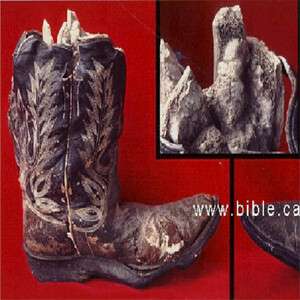
Petrified Cowboy Leg – A partially petrified human leg encased in a boot was discovered in the 1980s near Iraan, Texas. CT scans performed in 1997 at Harris Methodist Hospital in Bedford, Texas, revealed preserved bone structure within the boot. The documented scans remain archived with the artifact at the Creation Evidence Museum in Glen Rose, Texas.

Petrified Hat Petrified bowlers hat found in New Zealand.

Petrified Pickle Found byR. David Cozby

Petrified Flour – Found at 300 Pine StreetAnaconda, Montana 59711.Now in CSE (Creation Science Evangelism) Museum,Pensacola, Fl.
Create Your Own Petrified… Almost Anything
Under the right chemical conditions, mineralization can occur rapidly. A patented formula developed by a chemist allows organic materials, including wood, to be artificially petrified, illustrating that fossilization is governed by chemistry and environment rather than time alone.
Implications for Interpreting the Fossil Record
If fossilization can occur rapidly—and if rapid burial is a prerequisite—then the presence of vast numbers of well-preserved fossils throughout sedimentary strata demands explanation. Specifically:
- Why are fossils concentrated in certain layers rather than forming continuously?
- Why are organisms frequently preserved intact, articulated, or mid-action?
- Why do fossil-rich strata often extend across vast regions?
These questions cannot be answered by appealing to slow, uniform processes alone. Instead, they point toward episodes of rapid deposition capable of producing the conditions required for large-scale fossil preservation. This conclusion does not depend on theology. It follows directly from observed fossilization science. With the mechanics of fossilization established, the next question becomes unavoidable: What kind of geological processes are capable of producing rapid burial, widespread sedimentation, and mass fossilization on a global scale? That question leads directly to the evidence for catastrophic burial and mass death assemblages, examined in the next section.
Catastrophic Burial Indicators in the Fossil Record
If fossilization requires rapid burial under specific conditions, then the scale and distribution of fossils throughout the geologic record raise a critical question: what kind of processes could have produced such widespread, repeated, and well-preserved burial events? The fossil record itself provides multiple lines of evidence indicating that many organisms were not buried slowly over long periods of time, but instead were entombed rapidly, violently, and often simultaneously.
These observations fall within the field of taphonomy, the branch of paleontology that examines how organisms decay, are transported, buried, and ultimately preserved as fossils. Taphonomic processes include biological decomposition, mechanical disarticulation, chemical alteration, and sedimentary context. Understanding these processes is essential because the conditions required for fossil preservation are highly restrictive and occur only under specific, often rapid, depositional circumstances.
Organisms Preserved Mid-Action
One of the clearest indicators of rapid burial is the preservation of organisms in the middle of normal life activities—conditions incompatible with slow sediment accumulation. Numerous fossils document organisms that were buried:
- While feeding
- While giving birth
- While defending or fleeing
- In fully articulated positions, with no signs of prolonged decay
Such preservation requires a sudden sediment influx capable of overwhelming living organisms before scavenging, decomposition, or disarticulation could occur. Examples include fossilized fish preserved while consuming prey, marine reptiles entombed during parturition, and entire nesting sites preserved with eggs, hatchlings, and adults together. These cases are not isolated curiosities but are found repeatedly in fossil-bearing strata worldwide.

Tchthyosaur was buried while in the process of giving birth.
This is clear evidence that it must have been covered quickly in water-soluble sediments, in an underwater avalanche of mud. This creature shows no sign of rot or being disturbed by scavengers.
Photo copyright by Staatliches Museum for Naturkunde, Stuttgart.

Fish Frozen in Limestone
Here we have examples of fish eating another fish while getting fossilized instantaneously. This Caturus Furcatus is seen here eating a smaller fish. This provides additional evidence of a large catastrophe that covered this fish in sediment, instantly underwater.

Caturus frozen in the Mesozoic
Here is another example of a fish dated from the Mesozoic era that was instantly fossilized while eating its prey.

Eggs Found Next to Parents
In 1997, thousands of dinosaur eggs were found near Neuquen in Patagonia, Argentina, by a team led by Luis Chappe of the American Museum of Natural History in NY. These eggs were found alongside the parents and the hatchlings, all together. This would indicate that an instant fossilization had occurred, as large quantities of sediment and mud layers would have covered these dinosaurs while they were still in or near their nests.
Mass Death Assemblages and Fossil Graveyards
Another prominent feature of the fossil record is the presence of mass death assemblages—large concentrations of organisms preserved together within distinct sedimentary layers. In many cases, multiple individuals of the same species are found stacked vertically across sedimentary layers that are conventionally interpreted as representing millions of years of deposition, yet the fossils themselves show no signs of extended exposure between burial events. Such preservation strongly suggests repeated rapid burial events, rather than slow accumulation over long timescales. These assemblages commonly exhibit:
- High fossil density
- Minimal evidence of scavenging
- Little to no weathering
- Rapid, uniform burial
Fossilized Whale Baleen in the Pisco Formation (Peru)
In the late 1990s, Dr. Raúl Esperante and Dr. Leonard Brand, along with collaborators, investigated exceptionally preserved fossil whales within the Pisco Formation of southern Peru. The Pisco Formation is a thick (approximately 600 meters) marine sedimentary sequence, traditionally dated to the Miocene and Pliocene epochs and interpreted to represent millions of years of deposition.
One of the notable features reported in several specimens is the preservation of baleen structures — the keratin-based filter-feeding apparatus in mysticete whales. Modern whale baleen is composed primarily of keratin, a protein material that, under typical marine surface conditions, is expected to undergo rapid biological degradation, be consumed by scavengers, or break down during prolonged exposure.
The presence of preserved baleen structures in fossil whales raises questions about the rate and conditions of burial required to preserve such delicate tissues. Multiple whales and dolphins of the same species are found in various strata layers (dated to span a 10 to 12-million-years in cumulative range), yet perfectly preserved with no limited to no marks of scavenging or bone decay. Some preservations are in an upright position.
This shows evidence of rapid, large-scale sedimentation, mass mortality, and burial during high-energy marine events, and limited long-term exposure at the time of deposition. This raises questions about the duration and spacing between these depositional layers.

Soft Tissue and Delicate Structures Preserved
Their preservation in the fossil record implies extremely short intervals between death and burial, often measured in hours or days, not years. The presence of these fragile structures within thick sedimentary formations further reinforces the conclusion that fossilization occurred under exceptional, high-energy conditions. Delicate biological structures provide additional evidence for catastrophic burial. The following features are known to decay rapidly after death:
- Baleen in whales
- Fine skeletal articulation
- Soft tissue impressions
- Flexible or fragile anatomical components
Soft Dinosaur (T-Rex) Tissue – Contradiction to Millions of Years Old
In the early 2000s, paleontologist Mary Schweitzer of North Carolina State University reported a significant and unexpected discovery while demineralizing a Tyrannosaurus rex femur that had been conventionally dated to approximately 70 million years old. During the demineralization process, which involved soaking the fossil in a weak acid solution to remove the surrounding mineral matrix, Schweitzer and her colleagues observed the presence of flexible, pliable structures consistent with soft tissue, including transparent blood vessel–like structures and material resembling red blood cells.

These structures were not mineralized replicas but exhibited elasticity and structural integrity characteristic of original biological tissues. Subsequent analyses identified proteins such as collagen, further confirming their biological origin. Importantly, Schweitzer and her research team were able to replicate these findings in multiple portions of the same T. rex specimen and later in additional dinosaur fossils that were similarly dated to tens of millions of years. This demonstrated that the observations were not isolated anomalies, contamination, or experimental artifacts, but reproducible results.

The persistence of soft tissue and biomolecular components in fossils assigned deep geological ages presents a substantial challenge to standard assumptions about molecular decay rates. Under known chemical and environmental conditions, soft tissues and proteins are understood to degrade relatively rapidly, even under ideal preservation circumstances. Their survival over tens of millions of years remains an unresolved problem within conventional deep-time models.

As a result, these findings raise fundamental questions regarding fossil age assignments, preservation mechanisms, and the assumptions underlying long-term molecular stability. While various hypotheses—such as iron-mediated preservation—have been proposed, none have yet demonstrated the capacity to preserve soft tissues intact over the vast timescales required by traditional interpretations. Consequently, the discovery of soft tissue in dinosaur fossils does not merely represent an unusual preservation case; it calls into question whether current chronological interpretations fully account for the physical and chemical limits of biological material preservation.
Several hypotheses have been proposed within the scientific literature to account for the preservation of soft tissues and biomolecules, including iron-mediated crosslinking and mineral stabilization processes. While these mechanisms may contribute to delayed degradation under certain conditions, no proposed model has yet demonstrated the ability to preserve flexible tissues, intact protein structures, or cellular components over timescales of tens of millions of years under known chemical and environmental constraints. These discovery provides additional evidence that fossils we find were recently buried under a catastrophic world flood.
Widespread, Laterally Extensive Sedimentary Layers
Fossil-bearing strata frequently extend across vast geographic regions, often covering hundreds or thousands of square miles. Such lateral continuity is difficult to reconcile with localized, slow depositional environments, but is readily explained by large-scale sediment transport associated with catastrophic geological processes. These layers contain:
- Consistent sediment composition
- Similar fossil assemblages
- Sharp stratigraphic boundaries
Implications for Geological Interpretation
Taken together, these observations indicate that many fossil-bearing layers were formed through rapid sedimentation events capable of producing:
- Instant burial
- Mass mortality
- Exceptional preservation
- Regionally extensive deposits
This conclusion does not arise from theological assumptions, but from the physical requirements of fossil preservation and the empirical characteristics of the fossil record itself. With catastrophic burial firmly established as a dominant feature of fossil formation, the next issue becomes one of biological pattern rather than geology: what does the fossil record reveal about the appearance, persistence, and disappearance of organisms over time?
Patterns of Appearance: Sudden Emergence and Long-Term Stasis
If fossils were produced primarily through rapid burial under catastrophic conditions, then the fossil record should be evaluated not only for how organisms were preserved, but also for how they appear and persist through the stratigraphic record. When examined as a whole, the fossil record exhibits a consistent and well-documented pattern: organisms appear abruptly, fully formed, and remain largely unchanged (stasis) throughout their stratigraphic range before disappearing just as abruptly. This pattern stands in contrast to the gradual, branching progression predicted by classical evolutionary models.
Abrupt Appearance of Fully Formed Organisms
Across the fossil record, major groups of organisms appear suddenly without clear ancestral precursors in lower strata—by the evolutionary timescale itself. These organisms do not emerge as simple, transitional, or incomplete forms, but as fully functional and anatomically distinct creatures. In each case, the earliest representatives of these groups already exhibit the defining characteristics of their respective body plans, with no series of progressively simpler ancestral forms preserved beneath them. This phenomenon is most famously illustrated by the Cambrian Explosion, but it is not limited to it. Similar abrupt appearances are observed repeatedly throughout the stratigraphic record, including among:
- Marine invertebrates
- Fish
- Amphibians
- Reptiles
- Birds
- Mammals
Early Multicellular Life and Fossil Record Discontinuity
Fossil evidence from the Francevillian Basin in Gabon has revealed structures dated to approximately 2.1 billion years ago, representing some of the oldest known examples of organized, multicellular or colonial life. These fossils, reported in peer-reviewed studies and summarized by ScienceDaily, consist of centimeter-scale, coordinated structures interpreted as prokaryotic or simple multicellular aggregates.
Importantly, these organisms are not animals and do not exhibit complex body plans. Instead, they appear to represent an early and limited experiment in biological organization, likely made possible by a temporary increase in atmospheric oxygen following the Great Oxidation Event.
What is particularly significant is that these early multicellular forms do not lead to a continuous fossil record of increasing complexity. After their appearance, the fossil record shows a prolonged absence—lasting over a billion years—of comparable multicellular structures.
Complex animal life does not appear until much later, abruptly, in the Cambrian strata. Rather than supporting a gradual evolutionary buildup toward complex life, this evidence highlights a recurring pattern in the fossil record: early appearance, long-term stasis or disappearance, and abrupt reemergence of complexity.

Long-Term Stasis Dominates the Fossil Record
Once organisms appear in the fossil record, they typically persist with little to no directional anatomical change across large stratigraphic intervals. This phenomenon—commonly referred to as stasis—is one of the most robust observations in paleontology. This pattern has been widely acknowledged in mainstream paleontology and led to the development of alternative evolutionary frameworks, such as punctuated equilibrium. Importantly, these models were introduced to account for the fossil data, not because the data naturally demonstrated gradualism. Rather than showing continuous transformation, fossil species tend to:
- Remain morphologically stable
- Exhibit only minor variation within a limited range
- Disappear without transitioning into a different organismal form
Absence of Continuous Transitional Series
Continuous transitional series are conspicuously absent. While fossils exhibiting mosaic traits (a mixture of features associated with different groups) or limited variation within groups do exist, they do not constitute complete evolutionary pathways demonstrating one fully distinct organism transforming into another. This absence cannot be dismissed as a minor data gap. The fossil record contains billions of specimens across vast regions of the Earth. The systematic lack of transitional continuity is therefore a pattern, not an accident of preservation. If large-scale biological transformation occurred gradually over millions of years, the fossil record should contain:
- Extensive sequences of intermediate forms
- Numerous partial or transitional morphologies
- Clear ancestral–descendant chains connecting major groups
Multiple “Explosions,” Not a Single Event
The Cambrian Explosion is often treated as a unique anomaly, yet the broader fossil record reveals multiple episodes of sudden appearance across different taxonomic groups and stratigraphic levels. Birds, mammals, bats, and various fish groups appear abruptly in the record with no clear ancestral sequences beneath them. These repeated patterns of emergence suggest that the Cambrian Explosion is not an exception, but an early and particularly striking example of a more general fossil pattern.
The Cambrian Explosion
The Cambrian Explosion refers to a well-documented phenomenon observed in the lower portion of the geologic column, specifically within Cambrian strata. It describes the abrupt appearance of a wide diversity of complex animal life early in the fossil record and is frequently characterized by biologists as a biological “big bang.” This event presents a significant challenge to classical evolutionary expectations, which predict a long, gradual progression from simple microbial life to complex multicellular organisms. In contrast, the Cambrian Explosion reveals the sudden appearance of complex animals without clear ancestral precursors in the strata below. Cambrian deposits, conventionally dated to approximately 530 million years ago, contain a remarkable diversity of life. Nearly all major animal phyla and fundamental body plans appear within this narrow stratigraphic interval, indicating that these organisms existed contemporaneously rather than emerging through a slow, stepwise process.
According to conventional evolutionary estimates, the Cambrian Explosion occurred over a relatively brief geological interval of approximately 20–25 million years. During this period, nearly all major animal phyla and foundational body plans appear abruptly in the fossil record, without clearly identifiable ancestral forms in the strata below. This concentration of biological novelty within such a narrow stratigraphic window is striking, particularly given that earlier Precambrian layers—representing far greater spans of time—contain comparatively sparse fossil evidence of complex multicellular life.
Fossil Record Below the Cambrian
Strata beneath the Cambrian layers contain very few fossilized remains.
The limited specimens that do occur are typically small, soft-bodied organisms, often interpreted as simple worm-like forms. Notably absent are fossilized ancestors of the complex animal groups that appear abruptly in the Cambrian layers above.
As a result, the fossil record exhibits a striking pattern: a scarcity of fossils below the Cambrian boundary followed by an explosion of biological complexity within the Cambrian strata itself.
This abrupt transition contrasts sharply with expectations of gradual evolutionary development.
Oldest Fossil Representatives
All of the following animal phyla—including early chordates—appear in Cambrian strata, without identifiable ancestral forms preserved in lower layers:
- Protozoa
- Arthropods
- Brachiopods
- Mollusks
- Bryozoans
- Coelenterates
- Sponges
- Annelids
- Echinoderms
- Chordates
These phyla enter the fossil record as distinct, fully formed groups, rather than as transitional intermediates. This pattern is consistent with models proposing multiple, abrupt origins of major life forms and stands in contrast to the evolutionary expectation of universal descent from a single common ancestor through gradual modification.
Fossil Distribution and Stratigraphic Depth
Fossils are not consistently distributed across stratigraphic layers at all geographic locations. In many cases—particularly with vertebrates—only a single fossil-bearing layer is present at a given site.
Where absolute depth can be compared, the stratigraphic pattern predicted by the geologic column is not always observed. For example, dinosaur trackways at a Jurassic site in Connecticut (Dinosaur State Park) occur at depths of approximately 50–100 feet, while comparable Cambrian fossil sites in New York contain fossils at depths of only a few feet.
Such discrepancies are typically attributed within evolutionary geology to post-depositional processes such as erosion, tectonic activity, or sediment removal. However, these explanations underscore that stratigraphic position alone does not consistently correspond to chronological sequence, and that fossil depth cannot be treated as a simple or uniform indicator of age.
Species Without Predecessors
‘Species Explosion’ throughout the Pre-Cambrian Layers is not the only recorded instance of a phenomenon like this that has been discovered.
Most fossils are examples of an instant ‘explosion’ of one type of organism or another as they are found without any predecessor discovered in descending layers.
For instance the bat, the only flying mammal suddenly appears in both hemispheres in the middle Eocene layers (50 Mya) fully developed and and anatomically precocious. It has no trace of ancestors.-Science of Dec 9, 1966 (Vol.154)

Implications for Biological Interpretation
These features align poorly with expectations of slow, continuous evolutionary transformation, but are fully consistent with models involving rapid burial of pre-existing, fully functional organisms. Recognizing this pattern is essential, because it reframes the discussion away from isolated fossil examples and toward system-level behavior of the fossil record itself. Taken together, the dominant biological signals of the fossil record are:
- Abrupt appearance
- Morphological completeness
- Long-term stasis
- Sudden disappearance
If organisms appear suddenly and persist without gradual transformation, the next logical question becomes unavoidable: Do fossils always appear in the expected evolutionary order? The following section examines cases where organisms are found out of sequence, including timeline reversals, coexistence evidence, and fossils that appear before their supposed evolutionary ancestors.
Timeline Reversals and Out-of-Sequence Fossils
If the fossil record reflects a long, orderly progression of life through time—as depicted in the traditional geologic column—then organisms should consistently appear in a predictable evolutionary sequence. Earlier life forms should precede later ones, ancestral groups should appear before their descendants, and fossils should rarely, if ever, violate this order. However, the fossil record does not always conform to this expectation. Instead, numerous discoveries reveal timeline reversals and out-of-sequence fossils, in which organisms appear earlier than predicted, coexist with forms they were not expected to overlap with, or occur outside their designated index ranges. These findings do not represent isolated anomalies; they recur across different locations, taxa, and stratigraphic contexts.
Mammals and Dinosaurs in the Same Strata

One of the most striking examples of timeline inconsistency involves the coexistence of mammals and dinosaurs. In a well-documented fossil discovery dated to the Early Cretaceous (approximately 130 million years ago by conventional dating), a fossilized mammal was found with the remains of a small dinosaur preserved within its stomach contents.
In China, scientists found a “dated” 130 million-year-old fossil from the early “Cretaceous Period”, containing a cat species with a parrot-sized (about 5 in. long) dinosaur in its stomach.
This specimen demonstrates that mammals were not merely small, insignificant, or ecologically marginal during the age of dinosaurs, as is often portrayed, but were sufficiently developed to prey upon dinosaurs.
The finding directly challenges simplified evolutionary narratives in which mammals only diversified meaningfully after the extinction of dinosaurs. Importantly, this discovery was reported and discussed in mainstream scientific literature and media, and its authenticity is not disputed. What remains debated is how such evidence fits within rigid evolutionary timelines.
Early Appearance of Advanced Organisms
Similar timeline tensions occur across multiple biological groups. Fossils of birds, mammals, and fish have repeatedly been discovered in stratigraphic contexts that push their origins significantly earlier than previously assumed. As new fossils are uncovered, evolutionary timelines are frequently revised backward, sometimes by tens of millions of years. While such revisions are often presented as refinements, their cumulative effect reveals a pattern: the fossil record consistently resists being confined to a neat, linear progression. Rather than confirming a stable evolutionary sequence, these discoveries suggest that complex organisms appear earlier, more suddenly, and with greater diversity than expected.
Complex Primitive Life Forms
Are Ancient Creatures Really Outdated?
Do the form and structure of ancient fossilized organisms reveal biologically unsophisticated systems that were later replaced by more advanced designs in modern animals?

The fossil record does not support this expectation. In addition to the fact that several organisms classified as “ancient” by evolutionary standards continue to exist today, paleontological research has documented that many early fossilized animals exhibit highly specialized and complex physiological features. Across numerous fossil groups, detailed anatomical studies reveal fully functional, integrated systems rather than incomplete or underdeveloped structures. As a result, paleontologists have repeatedly noted the absence of truly “primitive” life forms in the fossil record—defined here as organisms possessing partially formed or evolutionarily transitional biological systems. Instead, the earliest representatives of major animal groups appear with sophisticated, coherent designs comparable in complexity to those observed in modern organisms.
Trilobite eyes have “the most sophisticated eye lenses ever produced by nature.” – Lisa Sawver Science News Feb. 1974 p. 72
“The eyes of early trilobites… have never been exceeded for complexity or acuity…” – Stephen J. Gould Natural History Feb. 1984 p. 23
Trilobites (according to evolutionary theory lived over 500 mya) had eye lens that where a doublet, meaning that it is made of two lensTrilobites, which are conventionally dated by evolutionary models to over 500 million years ago, possessed an optical system of remarkable sophistication. Their eyes were composed of calcite lens doublets—a paired lens structure unlike that found in any extant arthropod. This configuration provided advanced optical correction properties not observed in modern arthropod vision systems. Additional fossil examples further illustrate that organisms classified as “primitive” by evolutionary chronology often display levels of complexity comparable to modern counterparts:
- Sarcopterygii (lobe-finned fish), conventionally dated to approximately 416 million years ago, exhibit anatomical complexity and functional integration comparable to modern fish.
- Ancient dragonflies are morphologically similar to modern dragonflies, differing primarily in size rather than structural complexity.
- Megalodon, dated to approximately 28 million years ago and reaching estimated lengths of up to 18 meters (about 60 feet), possessed physiological complexity comparable to that of modern sharks.
- Beelzebufo, a large extinct frog dated to approximately 65 million years ago, reached masses of around 4.5 kilograms (10 pounds) and exhibits skeletal and functional features consistent with modern amphibians.
- Kryostega, a large amphibian dated to approximately 240 million years ago, reached lengths of up to 4.5 meters (15 feet) and demonstrates anatomical complexity comparable to that of modern newts and salamanders.
Taken collectively, these examples indicate that biological complexity is not confined to later portions of the fossil record. Instead, organisms exhibiting a wide range of structural sophistication appear throughout the geologic column. Animals living today likewise range from relatively simple to highly complex forms, and this same distribution of complexity is observed among fossilized arthropods, amphibians, fish, reptiles, and mammals. The fossil record therefore does not document a consistent progression from simple to complex life forms, but rather reflects the coexistence of diverse levels of biological complexity across time—much as is observed in the modern biosphere.
Out-of-Place Fossils and Index Conflicts
Index fossils are commonly used to correlate rock layers and assign relative ages based on the assumed restricted time range of certain organisms. In practice, however, many index fossils are found:
- In multiple stratigraphic layers
- Across wide geographic regions
- Outside their expected chronological range
When such conflicts arise, they are typically resolved by reinterpreting local geology—invoking erosion, faulting, folding, or missing strata—rather than questioning the broader chronological framework itself. This practice highlights a methodological issue: the fossil record is often adjusted to fit the geologic column, rather than the geologic column being reevaluated in light of fossil evidence.
Coexistence Rather Than Succession
Taken together, these findings suggest that the fossil record more frequently documents the coexistence of diverse life forms rather than a strict sequence of replacement. Organisms traditionally assigned to widely separated evolutionary stages are often found overlapping in time and space, undermining the assumption of a clean, stepwise progression. This does not imply that fossils lack order, but it does indicate that the order observed is not the kind of order predicted by gradual evolutionary transformation.
Implications for Fossil Interpretation
Timeline reversals and out-of-sequence fossils do not, by themselves, establish an alternative historical model. What they do demonstrate is that:
- Fossil order is not consistently linear
- Index-based dating is not universally reliable
- Evolutionary timelines are more flexible and assumption-dependent than often acknowledged
These observations reinforce the need to distinguish observed fossil data from interpretive frameworks imposed upon it.
Human Footprints and Trackway Anomalies
Among the most debated fossil-related anomalies are reports of human-like footprints and trackways found in stratigraphic contexts conventionally assigned to deep geological time. These findings do not fit comfortably within standard evolutionary timelines and therefore warrant careful, methodologically cautious examination. It is important to note at the outset that footprint evidence differs from body fossils in several respects. Trackways record behavioral interaction with sediment at a moment in time, rather than preserved anatomy. As such, they are highly sensitive to sediment consistency, erosion, deformation, and later reworking—factors that must be considered when evaluating any individual claim.
Oldest Widely Accepted Hominin Footprints – Laetoli, Tanzania
Several claims of human or humanoid footprints have been reported from various geological contexts. However, the oldest footprints widely accepted within mainstream paleoanthropology are those discovered at Laetoli, Tanzania, and dated to approximately 3.7 million years ago. These footprints, first described by Mary Leakey, are attributed to an early hominin species and are notable for exhibiting a bipedal gait with foot morphology broadly consistent with upright walking. Their stratigraphic context, dating methodology, and repeated analysis have led to broad scientific acceptance.
By contrast, reports of purported human footprints from significantly older strata have not achieved similar acceptance within mainstream paleontology. This is largely due to methodological constraints and interpretive assumptions that define acceptable evidence in advance, including adherence to established stratigraphic sequences and evolutionary timelines. Claims that challenge these frameworks are often categorized as inconclusive or misinterpreted before comprehensive independent evaluation occurs. As a result, while footprint evidence remains a valuable tool for behavioral reconstruction, claims extending human trackways into strata conventionally assigned to the Mesozoic or earlier periods remain absent from peer-reviewed synthesis, not necessarily due to demonstrated falsification, but due to incompatibility with prevailing chronological models.
The Paluxy River Trackways (Texas) – Glenrose, Texas


Some of the most frequently discussed trackway anomalies are found along the Paluxy River near Glen Rose, where numerous dinosaur trackways are preserved in limestone formations traditionally dated to the Lower Cretaceous. Within this region, several elongated, human-like impressions have been reported in proximity to dinosaur tracks. Some trackways originally identified as human have later been reinterpreted as eroded dinosaur tracks, and these reassessments are openly acknowledged within the creation research community. However, other impressions remain disputed, with morphology, stride length, and apparent toe structure continuing to resist simple classification. Over the years, these impressions have been variously interpreted as:
- Genuine human footprints
- Eroded dinosaur tracks
- Infilled or elongated tridactyl impressions
- Natural erosional features
Isolated Human-Like Footprint Claims

Additional individual footprint specimens—such as the Delk Print and the Zapata Track—have been presented as evidence of human-like morphology in strata assigned deep ages. While critics often dismiss such examples outright, it is notable that definitive refutation is not always based on direct physical analysis, but sometimes on the assumption that such tracks cannot exist within the established evolutionary framework. These specimens have been the subject of ongoing debate regarding:
- Authenticity
- Stratigraphic provenance
- Possible carving or modification
- Natural formation mechanisms
Methodological Considerations
From a scientific standpoint, footprint evidence should neither be accepted uncritically nor dismissed a priori. What makes these trackway reports significant is not that they conclusively demonstrate humans coexisting with dinosaurs, but that their very presence generates tension with rigid evolutionary timelines. If human-like tracks were conclusively demonstrated within dinosaur-bearing strata, the implications would extend beyond isolated anomalies and would directly challenge foundational assumptions regarding the timing of human origins. A proper evaluation requires:
- Clear stratigraphic documentation
- Independent sedimentological analysis
- Morphological comparison
- Consideration of deformation and erosion processes
Why These Anomalies Matter
The broader relevance of these trackway reports lies in their interpretive treatment. When fossil or trackway evidence conflicts with established timelines, explanations typically appeal to erosion, misidentification, or redeposition—often without applying the same level of scrutiny to evidence that supports the prevailing model. This asymmetry highlights a key methodological issue: data inconsistent with the dominant framework are frequently resolved by reinterpretation rather than reevaluation of the framework itself.
Human footprint and trackway anomalies remain controversial and unresolved. While not all reported examples withstand scrutiny, some continue to resist definitive explanation. Their existence underscores the importance of separating observational data from interpretive assumptions, particularly when those assumptions are used to dismiss anomalous evidence outright. In this context, human trackway reports function as stress tests for evolutionary timelines rather than as standalone proofs. They reinforce the need for caution when treating the fossil record as a simple, linear narrative of biological history.
Video: Footprints in Stone Documentary
Because footprint evidence is especially susceptible to erosion, deformation, and misinterpretation, only claims supported by controlled excavation, documented stratigraphic context, and independent analysis are considered in this discussion. Reports lacking these criteria are excluded from evidentiary conclusions, regardless of their popularity in secondary or non-academic literature.
If fossils do not always appear in a predictable evolutionary order, the next question becomes critical: How reliable are the methods used to date fossils and correlate rock layers in the first place? The following section examines index fossils, stratigraphic assumptions, and circular reasoning in fossil dating.
Index Fossils, Stratigraphy, and Dating Assumptions

The interpretation of the fossil record depends not only on the fossils themselves, but on the methods used to correlate rock layers and assign relative ages. Central to this process are stratigraphy and the use of index fossils, which together form the basis of the conventional geologic timescale. While these tools are widely used, their application involves a number of assumptions that are not always made explicit.
Understanding these assumptions is essential for evaluating how confidently fossil ages and evolutionary sequences can be established.
What Index Fossils Are Supposed to Do
Index fossils are organisms that are believed to have existed for a relatively short geological time span, were geographically widespread, and are easily recognizable. When found in sedimentary layers, they are used to correlate strata across different regions and assign relative ages to rock formations. In principle, this method allows geologists to reconstruct a chronological sequence even when direct radiometric dating is unavailable.
All index fossils meet specific criteria before they are considered or referenced as index fossils:
- It must be present in rocks scattered over wide areas of the earth surface
- It must have features that clearly distinguish it from other organisms
- It must have lived during a relatively short span of time in the geologic time scale (i.e., it represents a group that theoretically evolved very rapidly)
- They must occur in fairly reasonable quantities.
Index Fossils and Expanding Stratigraphic Ranges

Index fossils are traditionally defined as organisms with a limited temporal range, wide geographic distribution, and diagnostic morphology, allowing them to serve as markers for correlating sedimentary layers within the geologic column. In practice, however, the stratigraphic ranges of many organisms initially classified as index fossils have expanded as new discoveries are made. A notable example involves Anomalocaris, a large predatory arthropod originally described from Cambrian deposits and long regarded as characteristic of that interval. While Anomalocaris itself is restricted to Cambrian strata, subsequent fossil discoveries have revealed closely related radiodont taxa in post-Cambrian layers, including Ordovician and Devonian deposits in regions such as North Africa and Europe.
These findings demonstrate that organisms previously assumed to be temporally restricted may persist far beyond their originally assigned stratigraphic boundaries. As a result, the usefulness of such taxa as strict index fossils is reduced, requiring chronological frameworks to be revised retroactively. Importantly, these organisms are not anatomically primitive or transitional in any meaningful biological sense. Radiodonts exhibit sophisticated morphology, including complex compound eyes, advanced jointed appendages, and streamlined body plans adapted for active predation and hydrodynamic efficiency. Their functional completeness challenges the expectation that early fossil forms should display incomplete or rudimentary biological systems.
Examples of Expanded or Revised Fossil Ranges
- Radiodonts (Anomalocaris-related taxa) – Expected range: Cambrian (≈541–485 Ma)
Actual findings: Related radiodont fossils discovered in Ordovician and Devonian strata, extending the group’s temporal range by over 100 million years. - Coelacanths (Lobe-finned fish) – Expected range: Devonian–Cretaceous (≈410–66 Ma)
Actual findings: Living specimens discovered in 1938; fossil range extended into the present, overturning assumptions of extinction and short stratigraphic duration. - Horseshoe Crabs (Xiphosura) – Expected range: Ordovician–Permian (≈480–250 Ma)
Actual findings: Fossils and living species show minimal morphological change for over 450 million years, extending their functional range to the present. - Nautiloids (Cephalopods) – Expected range: Paleozoic (≈500–250 Ma)
Actual findings: Fossil and living nautiloids demonstrate persistence across multiple geologic eras with limited structural change. - Birds – Expected range: Post-Jurassic diversification following dinosaurs
Actual findings: Well-developed avian fossils discovered in Jurassic and earlier-than-expected strata, repeatedly pushing avian origins backward. - Mammals – Expected range: Small, ecologically insignificant forms during the Mesozoic
Actual findings: Increasingly complex and diverse mammal fossils discovered deep within Mesozoic strata, including predatory species. - Flowering Plants (Angiosperms) – Expected range: Early Cretaceous
Actual findings: Fossil pollen and plant structures reported in older Jurassic and Triassic contexts, extending their inferred origins.
The Problem of Circular Reasoning
In practice, however, index fossil dating often involves methodological circularity. Rock layers are dated based on the fossils they contain, while those same fossils are assigned ages based on the assumed age of the rock layers in which they are found.
Once the geologic column is established, fossil occurrences that conform to it are treated as confirmations, while conflicting data are typically explained away through secondary geological adjustments. This does not invalidate stratigraphy as a tool, but it does mean that fossil-based dating is not independent of the assumptions used to construct the geological framework itself.
Radiometric Dating: Assumptions and Methodological Limits
Radiometric dating is frequently presented as an independent and definitive method for determining the absolute ages of fossils and rock layers. In practice, however, radiometric dating does not directly date fossils themselves, but rather dates the surrounding igneous materials or mineral inclusions assumed to be associated with fossil-bearing strata. All radiometric dating methods rely on several foundational assumptions, including:
(1) known initial conditions,
(2) closed-system behavior over time, and
(3) constant decay rates unaffected by environmental factors.
If any of these assumptions are violated, calculated ages may be significantly altered. Importantly, radiometric dates are often calibrated and interpreted within an existing stratigraphic framework. Fossil assemblages are used to correlate rock layers, while radiometric ages are then evaluated for consistency with those correlations. When discrepancies arise, dates that conflict with the established geologic column are commonly reinterpreted or excluded, while concordant results are accepted. This interdependence means that radiometric dating is not entirely independent of the stratigraphic assumptions it is used to support. This does not invalidate radiometric methods as analytical tools, but it does indicate that such dates are model-dependent and interpretive rather than direct measurements of fossil age. Consequently, radiometric dating cannot by itself resolve questions regarding the timing, rate, or mechanism of fossil formation without reference to broader geological assumptions.
Index Fossils Outside Their Expected Ranges

Contrary to textbook illustrations, many index fossils are found:
- In multiple stratigraphic layers
- Across wide geographic regions
- Outside their presumed temporal ranges
When such occurrences conflict with the standard timescale, they are commonly attributed to reworking, erosion, faulting, or missing strata. While these explanations are sometimes valid, their frequent invocation highlights a deeper issue: the chronological framework is often protected from falsification by interpretive flexibility. As a result, index fossils function less as neutral time markers and more as tools constrained by prior chronological expectations.
It is important to distinguish between simple misidentification and genuine stratigraphic range expansion. In many cases, fossils originally classified as temporally restricted are later reassigned to broader groups or closely related taxa as new material is discovered. While such reclassification is often presented as a refinement rather than a contradiction, it nonetheless reflects a predictive limitation: organisms assumed to be confined to narrow geological intervals are repeatedly shown to persist far beyond their originally proposed ranges. This pattern reduces the reliability of index fossils as strict chronological markers and highlights the provisional nature of fossil-based correlation.
Stratigraphy Is Not a Simple Vertical Timeline
Stratigraphic depth is frequently presented as a straightforward proxy for age, yet real-world geology is far more complex. Sedimentary layers can be:
- Tilted or folded
- Faulted or displaced
- Eroded and redeposited
- Missing entirely
Consequently, fossils found at different depths in different locations do not necessarily represent different ages. Shallow fossils are not inherently young, nor are deeper fossils inherently old. Context, depositional environment, and geological history must all be considered. This complexity further undermines the assumption that fossil position alone can reliably establish a universal evolutionary timeline.
Fossil Order vs. Fossil Interpretation
It is important to note that fossils do exhibit patterns of distribution and association. However, recognizing patterns is not the same as proving a specific historical narrative. The issue is not whether fossils can be ordered, but whether that order uniquely supports gradual evolutionary descent over alternative explanations, such as rapid burial, ecological zonation, or catastrophic sedimentation.
Implications for the Fossil Record
When index fossils, stratigraphy, and dating methods are examined together, a clear conclusion emerges: fossil chronology is interpretive rather than intrinsic. This does not mean that fossils lack meaning or structure, but it does mean that fossil-based timelines are dependent on underlying assumptions about deposition rates, geological processes, and Earth history. Recognizing these assumptions allows the fossil record to be evaluated more critically and opens the door to alternative interpretations that may better account for the data.
With the assumptions behind fossil dating clarified, the final question remains: What does the fossil record, taken as a whole, actually testify to about Earth’s past? The concluding section synthesizes the evidence and draws together the major lines of argument presented throughout this article.
Are There Transitional Fossils?
A central claim of evolutionary theory is that large-scale biological differences arose through descent with modification over deep time. Under that framework, the fossil record is expected to preserve, at least in principle, transitional sequences—forms that plausibly connect major groups through successive, testable anatomical intermediates. It is important to distinguish between two different ideas often conflated in popular discussion:
- Variation within a group (microevolution, population-level change, or species-level variation), which is broadly observed and well documented, and
- Demonstrated macroevolutionary transitions, meaning fossil series that establish a clear ancestral–descendant pathway from one distinct body plan to another, with functional continuity and stratigraphic support.
The primary issue in fossil interpretation is not whether fossils show variation, but whether they preserve continuous, stepwise transitional chains linking major organismal groups in the way classical gradualist evolution predicts. While paleontologists have proposed various transitional candidates, these claims are frequently revised as additional evidence emerges.
In many cases, fossils display mosaic traits (a mixture of features associated with different groups) or variation within a broader category, but this is not equivalent to demonstrating a complete evolutionary pathway in which one reproducing kind gradually becomes another through a long sequence of intermediates. From a catastrophic interpretation, large fossil assemblages can also be understood in terms of rapid burial, ecological zonation, and sedimentary sorting, which may produce an apparent ordering of organisms in strata without requiring a universal evolutionary lineage between them.
The fossil evidence indicates that organisms preserved in the geological record exhibit the same fundamental genetic constraints and variation boundaries observed in living organisms today. This suggests that biological diversity operates within pre-existing genetic limits rather than arising from the continual generation of novel genetic information. In this view, genetic variation reflects the rearrangement, expression, or degradation of existing genetic information, not the open-ended expansion of biological complexity. Fossilized organisms, therefore, appear to conform to the same informational boundaries that govern modern life, implying continuity in genetic potential rather than a progressive accumulation of fundamentally new biological instructions over time.
Invertebrates and Fish (Chengjiang, China)
Some of the oldest fossil fish commonly cited in the geological record were discovered at the Chengjiang fossil locality in Yunnan Province, China. Two examples frequently referenced are Haikouichthys and Myllokunmingia, often dated to approximately 530 million years ago in conventional timescales. These fish occur in deposits that also contain abundant invertebrate fossils. Within a strict evolutionary narrative, this raises a key interpretive question: if invertebrates were gradually transforming into fish during this interval, the expectation would be a clearer ancestral series showing progressive anatomical development. Instead, fish and invertebrates appear within the same fossil assemblages, consistent with coexistence rather than a simple, linear transformation sequence.
Fish to Amphibians (Lobe-Finned Fish)

Lobe-finned fish (sarcopterygians) have often been discussed as candidates relevant to the fish-to-tetrapod transition because their fins contain internal skeletal elements that can be compared to tetrapod limb bones.
The coelacanth, in particular, was once widely presented in popular literature as a key transitional form. However, the discovery of living coelacanths off the coast of South Africa in 1938 demonstrated that at least this lineage persisted to the present. In evolutionary terms, the coelacanth is frequently categorized as a “Lazarus taxon,” meaning a lineage thought absent from the fossil record for an extended interval that later reappears.
The continued existence of coelacanths does not by itself refute evolution, but it does illustrate a broader fossil pattern: stasis, persistence, and discontinuity are common, and proposed “transitional” narratives are often more interpretive than demonstrative.
Amphibians to Reptiles

Some organisms, such as Seymouria, have been described as amphibian-like forms with features interpreted as reptile-associated, and are sometimes proposed as transitional candidates in the amphibian-to-reptile narrative.
However, discoveries of early reptiles dated earlier than expected in conventional sequences can complicate linear transition claims, requiring repeated revision of evolutionary timelines and phylogenetic assumptions.
Reptiles to Birds (Archaeopteryx and Early Birds)

Archaeopteryx has historically been presented as a transitional fossil between non-avian reptiles and birds because it possesses a combination of traits (feathers alongside features such as teeth and a long bony tail).
At the same time, fossil finds of well-developed birds dated to similar or earlier strata than expected in simplified evolutionary narratives complicate claims of a neat, stepwise pathway. These finds raise questions about whether “transitional” fossils represent true evolutionary intermediates or instead reflect mosaic design within already functional organisms.
Reptiles to Mammals (Early Mammals and Timeline Revisions)

Claims about the timing of mammal origins have also undergone repeated revision. Fossil discoveries from China and elsewhere have documented fully functional mammal forms deeper in the stratigraphic record than earlier evolutionary models predicted, resulting in timeline adjustments and revised phylogenetic relationships.
Such findings do not merely refine dates; they illustrate a recurring issue: the fossil record often forces evolutionary narratives to be revised retroactively, rather than confirming a stable, predictive sequence of transitions.
The fossil record contains abundant life, wide variation, and many organisms displaying specialized anatomy. What remains contested is whether it preserves the kind of continuous, stepwise, ancestral–descendant fossil series required by classical gradualist evolution for major body-plan transitions. In the fossil record, abrupt appearance, long-term stasis, and discontinuity are prominent features. Whether those patterns are best explained by evolutionary mechanisms over deep time or by alternative interpretations—including catastrophic burial and ecological sorting—remains a central point of dispute.
Conventional Evolutionary Timeframes for Major Animal Groups
According to standard evolutionary models, the major animal groups are proposed to have originated at different points in deep geological time and to have persisted, with modification, to the present:
- Cambrian Period (~541–485 million years ago): Initial appearance of most major animal body plans, commonly referred to as the Cambrian Explosion.
- Non-tetrapod marine organisms: Appearing early in the Paleozoic and continuing to the present.
- Fish: Appearing in the Cambrian–Ordovician and persisting to the present.
- Amphibians: Appearing in the Devonian (~400 million years ago) and continuing to the present.
- Reptiles: Appearing in the Carboniferous (~350 million years ago) and continuing to the present.
- Mammals: Appearing in the Late Triassic (~225 million years ago) and continuing to the present.
Within this framework, these groups are understood to have undergone extensive evolutionary modification over hundreds of millions of years. However, the fossil record does not consistently preserve continuous, stepwise transitional series linking these groups. Instead, organisms typically appear abruptly, remain relatively stable within their fossil range, and then disappear—patterns that raise questions about the adequacy of gradual evolutionary explanations for large-scale biological transitions.
Synthesis and Interpretive Implications of the Fossil Record
The fossil record represents one of the most extensive datasets available for reconstructing Earth’s biological past. Throughout this article, multiple independent lines of evidence have been examined, including fossilization requirements, sedimentary context, biological patterns, stratigraphic ordering, and dating assumptions. When considered together, these observations reveal a fossil record that is far more episodic, discontinuous, and catastrophic in character than is often conveyed in simplified evolutionary narratives.
Several consistent features emerge from the empirical evidence: Fossilization requires rapid burial, specific chemical conditions, and protection from decay, scavenging, and oxidation. Taken together, these observations suggest that the fossil record is not a simple chronological archive of gradual biological transformation, but rather a complex historical record shaped by large-scale depositional events. These requirements are incompatible with slow, incremental sediment accumulation in most environments.
- Fossils are frequently found in mass graveyards, laterally extensive sedimentary layers, and articulated states that indicate sudden burial events, often affecting entire ecosystems simultaneously.
- The biological pattern of the fossil record is dominated by abrupt appearance, long-term stasis, and sudden disappearance, rather than gradual transformation.
- Continuous, stepwise transitional fossil chains linking major body plans are not consistently preserved, despite the abundance of fossils overall.
- Index fossils and stratigraphic ranges have repeatedly required revision as new discoveries extend organisms earlier or later than originally predicted.
- Fossil dating relies heavily on interpretive frameworks, including assumptions about deposition rates, stratigraphic continuity, and radiometric calibration, rather than on intrinsic age indicators within the fossils themselves.
Video : Fossils Are Evidence for The Great Deluge
Limits of Uniformitarian Interpretation
Uniformitarian geology, which emphasizes slow and steady processes operating over vast timescales, has provided useful explanatory tools for understanding many modern geological phenomena. However, the fossil evidence repeatedly indicates that high-energy, rapid, and regionally extensive processes must have played a dominant role in the formation of fossil-bearing strata. The frequent need to revise evolutionary timelines, reinterpret stratigraphic anomalies, and accommodate out-of-sequence findings underscores the limitations of strictly uniformitarian explanations when applied to the fossil record as a whole.
Catastrophic Models as Explanatory Frameworks
Catastrophic geological models offer an alternative interpretive approach that aligns more closely with the observed requirements of fossil preservation. provide coherent mechanisms for explaining fossil distribution, layering, and preservation without requiring extended periods of biological transformation between strata. Importantly, catastrophism is not a rejection of empirical science, but a recognition that Earth’s history likely includes episodic events of exceptional magnitude, rather than exclusively gradual processes. Processes such as:
- Rapid sediment transport
- Large-scale water movement
- Ecological zonation
- Hydrodynamic sorting
- Repeated burial events
The Flood Model as a Historical Interpretation
One historically significant catastrophic framework is the account of a global flood preserved in ancient Near Eastern literature, most notably the narrative associated with Noah in the Hebrew Scriptures. Long before the development of modern geology or evolutionary theory, this account proposed a large-scale, water-driven catastrophe capable of rapidly reshaping Earth’s surface and burying vast numbers of organisms. When considered as a historical model rather than a presupposition, the Flood framework provides a unified explanation for many features of the fossil record, including:
- Rapid and widespread burial
- Marine fossils found far inland and at high elevations
- Extensive sedimentary layers spanning continents
- Mixed fossil assemblages
- The abrupt appearance and disappearance of organisms within the stratigraphic record
While acceptance of this model depends on broader historical and philosophical considerations, its explanatory scope should not be dismissed solely on non-empirical grounds. The fossil record does not simply document the existence of ancient life; it records the manner in which that life was buried, preserved, and distributed. The evidence reviewed here indicates that catastrophic processes must have played a central role in shaping the fossil record and that interpretations relying exclusively on slow, uniform processes struggle to account for its most prominent features. Whether one ultimately adopts a uniformitarian, catastrophic, or hybrid historical model, any comprehensive explanation of Earth’s fossil record must adequately address the empirical realities of rapid burial, biological stasis, stratigraphic discontinuity, and interpretive dating assumptions. Recognizing these constraints is essential for an honest and rigorous assessment of Earth’s past.
Frequently Asked Questions About the Fossil Record
Do fossils prove biological evolution?
Fossils document the existence of past life and the conditions under which organisms were buried and preserved. While evolutionary theory interprets fossils as evidence of biological descent over time, fossils themselves do not directly record ancestry or transformation. Interpreting fossils requires additional assumptions about timescales, mechanisms, and depositional history.
How quickly can fossils form?
Experimental studies, laboratory observations, and natural examples demonstrate that fossilization can occur rapidly under the right conditions, including rapid burial, mineral-rich fluids, and oxygen-poor environments. While not all fossils form quickly, long timescales are not a prerequisite for fossil preservation.
Why are transitional fossils rare or disputed?
Evolutionary models predict transitional forms between major biological groups; however, the fossil record more commonly displays abrupt appearance, long-term stability (stasis), and disappearance. While fossils with mixed or mosaic traits exist, continuous, stepwise ancestral–descendant series are not consistently preserved.
What are index fossils, and how reliable are they?
Index fossils are organisms assumed to have existed during relatively short geological intervals and are used to correlate rock layers. In practice, many index fossil ranges have expanded as new discoveries are made, reducing their reliability as strict chronological markers and highlighting the interpretive nature of stratigraphic correlation.
Do fossils require millions of years to form?
No. Fossils do not inherently contain age information. Age estimates are derived from the surrounding geological context, radiometric dating assumptions, and stratigraphic models. Fossil preservation itself depends primarily on burial conditions, not elapsed time.
References
Live Science – Mammal Ate Dinosaur 130 Million Years Ago
https://www.livescience.com/3794-dinosaur-fossil-mammal-stomach.html
National Geographic – Soft Tissue Found in Dinosaur Fossils
https://www.nationalgeographic.com/science/article/soft-tissue-found-in-dinosaur-fossils
ScienceDaily – Complex Multicellular Life Existed More Than 2 Billion Years Ago
https://www.sciencedaily.com/releases/2010/07/100728141951.htm
Harvard Gazette – Oldest Known Mammal Fossil Found (≈195 Million Years Old)
https://news.harvard.edu/gazette/story/2011/08/oldest-mammal-fossil/
Institute for Creation Research (ICR) – The Cambrian Explosion and Evolutionary Theory
https://www.icr.org/article/cambrian-explosion-disproves-evolution
Answers in Genesis – Rapid Fossil Formation and Laboratory Evidence
https://answersingenesis.org/fossils/how-are-fossils-formed/
Creation Evidence Museum / CreationEvidence.org – Fossil Footprints and Human Trackway Claims
https://www.creationevidence.org
Smithsonian Magazine – MacDonald, J. – Petrified Footprints: A Puzzling Parade of Permian Beasts – Smithsonian Magazine, Vol. 23, No. 4 (July 1992), pp. 70–79
Rubtsov, V. – Tracking Dinosaurs – Moscow News, No. 24, 1983, p. 10
Bushnev, A. – Komsomolskaya Pravda, January 31, 1995, pp. 61ff
Baugh, C. E. – Dinosaurs – Promise Publishing Co., Orange, California, 1987
Leave a Reply
You must be logged in to post a comment.