

Theology and Bible Studies – Sin and Salvation
– Articles on Sin and Salvation –


Browse related categories: Soteriology – Salvation Study
Table of Contents
Overview
Soteriology is the study of salvation—how God rescues sinners, restores them to Himself, and secures eternal life through Jesus Christ.
What is salvation? In Scripture, salvation is God’s deliverance of people from sin, guilt, spiritual death, and final judgment, bringing them into reconciliation with God, new life, and a restored relationship with Him. Salvation is therefore more than “self-improvement”—it is rescue, forgiveness, regeneration, and restoration accomplished by God and received by faith.
The Bible speaks of salvation with a “past, present, and future” fullness. Believers can say they have been saved, they are being saved, and they will be saved—not because salvation changes, but because God’s saving work is applied and completed across the whole life of the believer.
- Saved (past): God has rescued us by grace through faith (Ephesians 2:8).
- Being saved (present): the gospel continues to be God’s power in the believer’s life (1 Corinthians 1:18).
- Will be saved (future): final salvation is nearer as we move toward Christ’s return and final redemption (Romans 13:11).
What are we saved from?
Scripture teaches that we are saved from sin and its consequences—its guilt before God, its power over our lives, and its final outcome in judgment—so that we may be restored to God and made alive to Him.
Biblically, “salvation” is an encompassing term that includes deliverance, healing, and restoration. In the Old Testament, the idea often centers on God’s deliverance and rescue; in the New Testament, it is revealed in fullness through Christ’s atoning work and the Spirit’s regenerating power. Salvation is therefore both an accomplished work (Christ’s finished sacrifice) and a personally received gift (applied to the believer through faith).
Salvation addresses humanity’s deepest problem: spiritual separation from God. Because God is the source of life, separation from Him results in spiritual death. Salvation is therefore the restoration of life—God bringing the sinner from death to life, from alienation to reconciliation.
Jesus said to him, I am the true and living way: no one comes to the Father but by me. – John 14.6
(Concerning Jesus) But it was for our sins he was wounded, and for our evil doings he was crushed: he took the punishment by which we have peace, and by his wounds we are made well (or healed). – Isaiah 53.5
Origin of Salvation

Where does salvation come from? Scripture teaches that salvation originates in God’s mercy and purpose, not in human ability. Sin is humanity’s rebellion against God, but salvation is God’s gracious provision to rescue sinners. God is not compelled by anything outside Himself; He saves because He is loving, righteous, and faithful to His own character.
At the same time, the biblical call to respond is real: God commands repentance and faith, and He holds people accountable for rejecting His truth. A sound doctrine of salvation therefore keeps two truths together: salvation is God’s work from start to finish, and human response is a genuine moral responsibility.
Salvation is of Jehovah.
Jonah 2:9
Why did God make a way for salvation? God’s saving work reveals both His love and His holiness. Salvation is not God ignoring sin; it is God providing a righteous way to forgive sinners through the gift of His Son. The cross displays God’s mercy toward the undeserving while upholding His justice against sin.
For God so loved the world, that he gave his only Son, that whoever believes in him should not perish but have eternal life.
John 3:16
But God shows his love for us in that while we were still sinners, Christ died for us.
Romans 5:8
Salvation is Not of Man
Salvation does not come from human ancestry, moral effort, religious ritual, or personal willpower. No one can regenerate their own heart or erase guilt before a holy God. New birth is God’s work—granted to those who receive Christ by faith.
But as many as received him, to them gave he the right to become children of God, even to them that believe on his name: who were born, not of blood, nor of the will of the flesh, nor of the will of man, but of God.
John 1:12–13
Salvation Comes From God Alone
Only God can save because only God can deal with the root problem of sin—its guilt, its power, and its final consequences. Salvation is not self-improvement; it is divine rescue. God initiates salvation, provides the atoning sacrifice, and calls sinners to receive what they could never earn.
The illustration below is a parable-style summary of redemption meant to clarify the difference between human inability and God’s saving intervention.

Parable: Salvation can be understood through the story of three children who were deceived into selling themselves into slavery for a cheap and unworthy price to a cruel warlord master. Though the decision was foolish, it was real—and once made, the children found themselves trapped under a warlord master whose rule brought only suffering, fear, and eventual death.
The warlord deceiver placed the children under heavy burdens, forcing them into labor while promising that one day they would face a horrific punishment from which there would be no escape. The children had no means to free themselves; the price of their freedom was far beyond their ability to pay.
One day, a righteous King passed by and saw the children in their misery. Moved by compassion, He asked what price would be required to set them free. The warlord, unwilling to release them, demanded everything the King possessed and required that the King Himself suffer the punishment that had been promised to the children.
The King willingly agreed. He paid the full price and endured the suffering required to secure their freedom. Yet when the rescue was accomplished, the response of the children was not the same. Some mocked the King, rejecting His sacrifice, because slavery was the only life they had ever known.
Eventually, two of the children came to trust the King and what He had done. They left the warlord’s camp and lived in the freedom that had already been purchased for them. Tragically, the third child never trusted the King’s sacrifice and remained in bondage, ultimately suffering the fate that slavery had always promised.
This parable illustrates that redemption is fully accomplished by another, freely offered to all, and genuinely available—yet it must be personally received.
- Children = Mankind
- Warlord = The Devil
- King = Jesus Christ
- Burden & Grief = Sin
- Price = Jesus’ death on the cross
There was no way the children could redeem themselves. Only another could purchase their freedom. In the same way, humanity cannot save itself. Jesus not only paid the price for our redemption, but He also bore our burdens upon Himself so that we might truly be free.
Salvation comes by God’s Kindness & Love
Salvation flows from God’s gracious character, not from human merit. God was not obligated to save; He chose to save. Scripture presents salvation as an act of divine kindness—freely given, undeserved, and rooted in God’s loving purpose.
This kindness does not diminish God’s justice. Instead, God’s love is displayed precisely because salvation is accomplished through a righteous substitute. Grace does not excuse sin; it overcomes sin through Christ.
Having foreordained us unto adoption as sons through Jesus Christ unto himself, according to the good pleasure of his will, to the praise of the glory of his grace, which he freely bestowed on us in the Beloved
Ephesians 1. 5-6
but God, being rich in mercy, for his great love wherewith he loved us
Ephesians 2.4
Salvation is freely offered to all people, it is simply a matter of choice for an individual to come to God, and to trust in Him. It has nothing to do with anything that a person can or will do, but is based completely upon God’s free gift to us. Salvation is freely offered to all and already given to all those who put their faith in Him.
For God had such love for the world that he gave his only Son, so that whoever has faith in him may not come to destruction but have eternal life. – John 3.16
So then, as the effect of one act of wrongdoing was that punishment came on all men, even so the effect of one act of righteousness was righteousness of life for all men. – Rom 5.18
For the grace of God has come, giving salvation to all men, – Tit 2.11
But God has made clear his love to us, in that, when we were still sinners, Christ gave his life for us. – Rom 5.8
But when the mercy of God our Saviour, and his love to man was seen, Not by works of righteousness which we did ourselves, but in the measure of his mercy, he gave us salvation, through the washing of the new birth and the giving of new life in the Holy Spirit, – Titus 3.4-5
Salvation Comes from God’s Desire
Because salvation is grounded in God’s character, Scripture repeatedly emphasizes that God’s desire is for sinners to turn and live. This desire does not negate human responsibility, but it reveals the heart of God toward a fallen world.
This is good and pleasing in the eyes of God our Saviour; Whose desire is that all men may have salvation and come to the knowledge of what is true. – 1 Tim 2.3-4
The Lord is not slow in keeping his word, as he seems to some, but he is waiting in mercy for you, not desiring the destruction of any, but that all may be turned from their evil ways. – 2 Peter 3.9
Salvation Comes by God’s Grace and Unmerited Favor
Scripture teaches that salvation is grounded in God’s will and eternal purpose. God’s plan to redeem is not reactionary or improvised; it reflects His wisdom, foreknowledge, and good pleasure. Salvation therefore rests securely in God’s initiative, not in human instability.
For the wages of sin is death; but the free gift of God is eternal life in Christ Jesus our Lord. – Rom 6.23
for by grace have ye been saved through faith; and that not of yourselves, it is the gift of God – Ephesians 2.8
Salvation Comes According to Ordination
Salvation was something that God planned on doing from the beginning, even before He formed mankind. In His omniscience and also due to the fact that He exists outside of time and is able to see all events from the beginning to the end (Isaiah 41), He knows who are His and who will come to Him by faith.
even as he chose us in him before the foundation of the world, that we should be holy and without blemish before him in love: – Eph 1.4
And all that dwell on the earth shall worship him, every one whose name hath not been written from the foundation of the world in the book of life of the Lamb that hath been slain. – Rev 13.8
God Predestined all Believers Before the World Began
according to the foreknowledge of God the Father, in sanctification of the Spirit, unto obedience and sprinkling of the blood of Jesus Christ: Grace to you and peace be multiplied. – 1 peter 1.2
having foreordained us unto adoption as sons through Jesus Christ unto himself, according to the good pleasure of his will, – Eph 1.5
For to this end we labor and strive, because we have our hope set on the living God, who is the Saviour of all men, specially of them that believe. – 1 Tim 4.10
Theological Viewpoints on Predestined Salvation:
There are a few different schools of thought when it come to the doctrine of predestination. Depending on interpretation of all the combined scriptures concerning predestination, there are about 4 primary categories of beliefs.
These categories reflect theological frameworks used to interpret Scripture, not independent doctrines separate from biblical authority
| Supralapsarianism | Infralapsarianism | Sublapsarianism | Wesleyanism |
| Salvation only for the Elect (created both to be elect / or non) | Salvation only for the Elect (elect some and pass others) | Elected only those who believe | Election based on God’s foreknowledge of who will believe |
Þ see Bible Study – Predestination

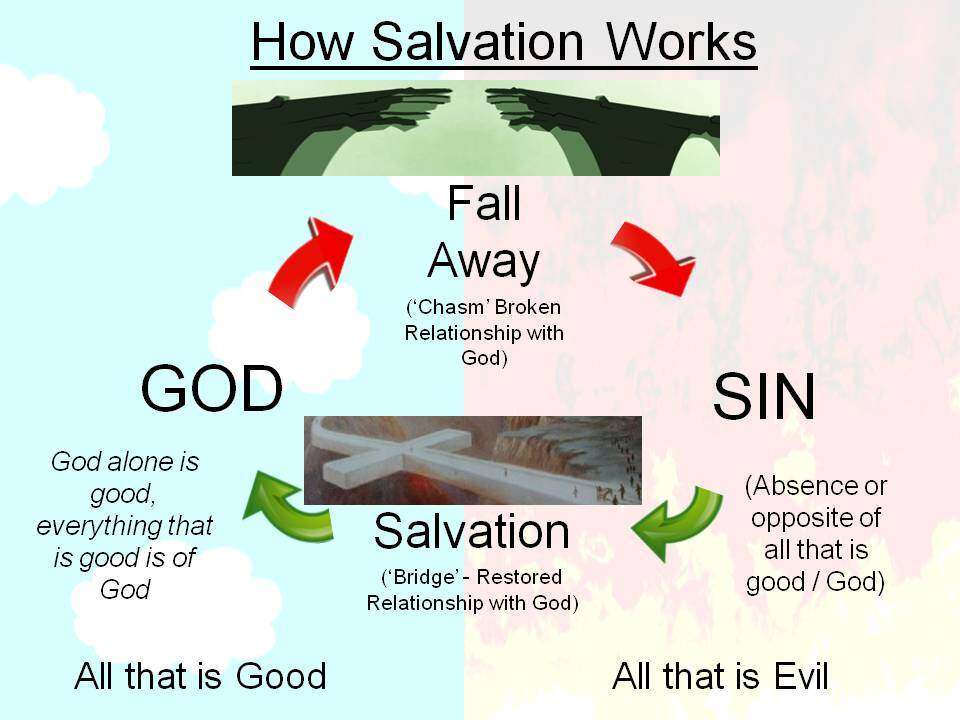
How Salvation Works
Salvation is ultimately the work of God, accomplished by His initiative, power, and grace. At the same time, Scripture presents salvation as something that must be personally received through faith. These two realities are not opposed but work together within God’s redemptive design.
God’s Side:
Salvation originates entirely with God and is accomplished through His sovereign action.
- Decree – By the decree of the Father,
- Sacrifice – Through the work and sacrifice of the Son,
- Work – Bringing & keeping sinners in faith through the Holy spirit.
Human Response:
Scripture describes salvation as experienced in three distinct but inseparable stages in the life of the believer.
- Justification – being declared righteous before God through faith
- Sanctification – being progressively transformed into Christ’s image
- Glorification – the final completion of salvation in eternal life
God’s Saving Actions
God is the supplier of salvation. He does not respond to human need because He lacks something, but because He is gracious and generous. Salvation flows from the abundance of God’s grace, not from human merit.
Grace is effectual in those who believe—it does not merely offer salvation but brings about real spiritual change. God grants repentance, awakens faith, and supplies everything necessary for new life in Christ.
neither is he served by men’s hands, as though he needed anything, seeing he himself gives to all life, and breath, and all things; – Acts 17.25
For of him, and through him, and unto him, are all things. To him be the glory for ever. Amen. – Rom 11.36
But who am I, and what is my people, that we should be able to offer so willingly after this sort? for all things come of thee, and of thine own have we given thee. – 1 Chron 29.14
Or despisest thou the riches of his goodness and forbearance and longsuffering, not knowing that the goodness of God leadeth thee to repentance? – Romans 2.4
But not as the trespass, so also is the free gift. For if by the trespass of the one the many died, much more did the grace of God, and the gift by the grace of the one man, Jesus Christ, abound unto the many. – Rom 5.15
For the wages of sin is death; but the free gift of God is eternal life in Christ Jesus our Lord. – Rom 6.23

God Seals us in His Spirit
God not only initiates salvation but secures it. Those who believe are sealed by the Holy Spirit as a guarantee of their inheritance. This seal signifies ownership, protection, and the certainty of future redemption.
in whom ye also, having heard the word of the truth, the gospel of your salvation, – in whom, having also believed, ye were sealed with the Holy Spirit of promise, which is an earnest of our inheritance, unto the redemption of God’s own possession, unto the praise of his glory. – Eph 1.13-14
And grieve not the Holy Spirit of God, in whom ye were sealed unto the day of redemption. – Eph 4.30
But ye are not in the flesh but in the Spirit, if so be that the Spirit of God dwelleth in you. But if any man hath not the Spirit of Christ, he is none of his. – Rom 8.9
How Salvation is Accomplished
Salvation is accomplished through God’s redemptive plan carried out in history. What was lost through humanity’s fall into sin is restored through the person and work of Jesus Christ. Scripture presents salvation not as a moral improvement project, but as a decisive act of divine intervention.
All was Lost by One Man’s Sin
Humanity’s original relationship with God was broken through Adam’s disobedience. Sin introduced separation, death, and corruption into the human condition. This separation could not be repaired by human effort, law-keeping, or sacrifice.
What humanity lost through Adam, God restores through Christ. Jesus acts as the second Adam, obeying where the first failed and bearing the consequences of sin on behalf of others.
So then as through one trespass the judgment came unto all men to condemnation; even so through one act of righteousness the free gift came unto all men to justification of life. For as through the one man’s disobedience the many were made sinners, even so through the obedience of the one shall the many be made righteous. – Rom 5.18-19
The Holy Spirit Convicts us of Sin
Salvation is applied to individuals through the convicting work of the Holy Spirit. Before repentance and faith can occur, God awakens the conscience to the reality of sin, righteousness, and judgment.
And Jehovah said, My spirit shall not strive with man for ever, for that he also is flesh: yet shall his days be a hundred and twenty years. – Gen 6.3
And he (the Holy Spirit), when he is come, will convict the world in respect of sin, and of righteousness, and of judgment: – John 16.8
Blood Sacrifices – Ancient Method of Salvation

Atonement in Scripture involves the giving of life, symbolized by the shedding of blood, because sin results in death. In ancient Israel, before the Messiah Jesus came, God allowed the Hebrews to come to God and symbolically put their sins on one of their animals as they had to watch it die for their own sins. The innocent blood of the animal would be shed for the sins of the person, this was the atonement in the Old Testament. This procedure was just a shadow of things to come. It was meant not only for the people to see the seriousness of sin, and the cost of it, but animal sacrifice was a symbol to the Israelites of what the Messiah was going to go through (Jesus’ sacrifice).
God forgives sins because atonement has been made for all mankind. Jesus’ innocent blood atoned all sins forever and we receive the forgiveness of sin because of it. Similar to a pardon from a court of law, it is not expunged but rather the doing of the wrong is erased from all history.
When the sin which they have done comes to light, then let all the people give an ox for a sin-offering, and take it before the Tent of meeting. And let the chiefs of the people put their hands on its head before the Lord, and put the ox to death before the Lord. And the priest is to take some of its blood to the Tent of meeting; And put his finger in the blood, shaking drops of the blood seven times before the Lord in front of the veil. And he is to put some of the blood on the horns of the altar which is before the Lord in the Tent of meeting – Lev 4.14-18
For the life of the flesh is in its blood; and I have given it to you on the altar to take away your sin: for it is the blood which makes free from sin because of the life in it. – Lev 17.11
And I will have mercy on their evil-doing, and I will not keep their sins in mind. – Heb 8.12
Because it is not possible for the blood of oxen and goats to take away sins. And every priest takes his place at the altar day by day, doing what is necessary, and making again and again the same offerings which are never able to take away sins. But when Jesus had made one offering for sins for ever, he took his place at the right hand of God; And has been waiting there from that time, till all who are against him are made a foot-rest for his feet. Because by one offering he has made complete for ever those who are made holy – Heb 10.4, 11-14
But it was for our sins he was wounded, and for our evil doings he was crushed: he took the punishment by which we have peace, and by his wounds we are made well. All went wandering like sheep; going every one of us after his desire; and the Lord put on him the punishment of us all. – Isa 53.5-6
In whom we have salvation through his blood, the forgiveness of our sins, through the wealth of his grace, – Eph 1.7
Who has made us free from the power of evil and given us a place in the kingdom of the Son of his love; In whom we have our salvation, the forgiveness of sins: – Col 1.13-14
Christ’s Sacrifice: Fulfillment of Atonement
Jesus Christ fulfills and replaces the Old Testament sacrificial system. His death was not symbolic, repetitive, or provisional. It was a once-for-all sacrifice that fully satisfied divine justice.
For the love of Christ constraineth us; because we thus judge, that one died for all, therefore all died; and he died for all, that they that live should no longer live unto themselves, but unto him who for their sakes died and rose again. – 2 Corin 5.14-15
being justified freely by his grace through the redemption that is in Christ Jesus: – Rom 3.24

Substitution and Healing
On the cross, Christ acted as a substitute, bearing the punishment deserved by sinners. Salvation is therefore grounded in justice satisfied and mercy displayed.
Forgiveness Past, Present & Future
Jesus’ death was so powerful that it saved and forgave the sins of not only those who believed on Him during His time on earth and for every age to come, but also for all those who came before Him and looked to His coming as well:
And the free giving has not the same effect as the sin of one: for the effect of one man’s sin was punishment by the decision of God, but the free giving had power to give righteousness to wrongdoers in great number. – Rom 5.16
Requirements for Salvation
Must Believe by Faith
Have Faith, (Trust) in God – We must trust that God freely gives salvation according to our faith as we come to Him, and believe in what He has done for us, namely, dying on the cross to take the place for our sins.
Belief means to trust in God, not just a one time acts, but rather a continual act for the rest of your life. You must believe and trust the one true God who created you for the rest of your life whom will lead and guide you. If you truly believed and trusted in God, your soul is regenerated and for the rest of your life you will be alive spiritually to God.
and without faith it is impossible to be well-pleasing unto him; for he that cometh to God must believe that he is, and that he is a rewarder of them that seek after him. – Heb 11.6
for it is God who worketh in you both to will and to work, for his good pleasure. – Phil 2.13
(God), when we were dead in our trespasses, made us alive together with Christ—by grace you have been saved – Eph 2.5
And they said, Believe on the Lord Jesus, and thou shalt be saved – Acts 16.31
that Christ may dwell in your hearts through faith; to the end that ye, being rooted and grounded in love, – Eph 3.17
for by grace have ye been saved through faith; and that not of yourselves, it is the gift of God; – Ephesians 2.8
even the righteousness of God through faith in Jesus Christ unto all them that believe; for there is no distinction; – Rom 3.22
There is therefore now no condemnation to them that are in Christ Jesus. For the law of the Spirit of life in Christ Jesus made me free from the law of sin and of death. For what the law could not do, in that it was weak through the flesh, God, sending his own Son in the likeness of sinful flesh and for sin, condemned sin in the flesh: that the ordinance of the law might be fulfilled in us, who walk not after the flesh, but after the Spirit. – Rom 8.1-4

Herein is love, not that we loved God, but that he loved us, and sent his Son to be the propitiation for our sins. – 1 John 4.10
For thus saith the high and lofty One that inhabiteth eternity, whose name is Holy: I dwell in the high and holy place, with him also that is of a contrite and humble spirit, to revive the spirit of the humble, and to revive the heart of the contrite – Isaiah 57.15
Repentance
God calls believers to live a life marked by repentance—not as a means of earning salvation, but as the ongoing response of a transformed heart. True repentance produces fruit in obedience, humility, and submission to God’s will.
In the Greek, the primary word translated as repent is metanoeō, meaning “to change one’s mind,” “to reconsider,” or “to think differently afterward.” Biblically, repentance involves an inner change of heart and mind that results in a decisive turning away from sin and a turning toward God.
Repentance is not merely feeling sorrow for wrongdoing, nor is it a self-improvement effort. It is a moral and spiritual reorientation in which a person abandons rebellion against God and submits to Him in faith. Scripture consistently presents repentance as inseparable from genuine belief.
As sinners, we are called to repent of sin (Luke 3.8). Repentance means turning away from a sinful way of life and turning toward Christ. This turning is directional and exclusive—one cannot move toward God while clinging to sin, nor pursue sin without rejecting God’s authority.
Repentance, and turning away from a sinful life, is to live a life doing the things God wants you to do. You can not turn towards God without turning away from sin, you can not choose or move towards sin without rejecting God, it is the choice of choosing one direction or the other, God or sin. In other words how can you say you put your faith in God, if you are living your life not trusting Him?
Jesus Said unless you repent you will perish – Luke 13.3
Or despisest thou the riches of his goodness and forbearance and longsuffering, not knowing that the goodness of God leadeth thee to repentance? – Romans 2.4
Unrepentance: Unwilling to be Saved
Although God is patient and desires repentance, not all are willing to turn from sin. Many choose sin over God because they do not trust Him with their lives or desires. This refusal is not due to a lack of opportunity, but a rejection of God’s call.
The Lord is not slow in keeping his word, as he seems to some, but he is waiting in mercy for you, not desiring the destruction of any, but that all may be turned from their evil ways. – 2 Peter 3.9
O Jerusalem, Jerusalem, putting to death the prophets, and stoning those who are sent to her! Again and again would I have taken your children to myself as a bird takes her young ones under her wings, and you would not! – Matt 23.37
Scripture Foundation for Soteriology
The doctrine of salvation is not derived from tradition, philosophy, or human effort, but from God’s revealed Word. Scripture defines humanity’s need for salvation, God’s provision in Christ, and the means by which salvation is received.
Human Need for Salvation (Sin)
- Romans 3:23 — All have sinned and fall short of God’s glory.
- Romans 6:23 — Sin results in death.
- Ephesians 2:1–3 — Humanity is spiritually dead apart from Christ.
God’s Provision of Salvation
- John 3:16 — Salvation flows from God’s love.
- Romans 5:8 — Christ died for sinners.
- Isaiah 53:5–6 — The Messiah bears sin and punishment.
Means of Salvation
- Ephesians 2:8–9 — Salvation is by grace through faith, not works.
- Romans 10:9–10 — Faith and confession lead to salvation.
- Acts 16:31 — Believe in the Lord Jesus Christ.
Result of Salvation
- Romans 8:1 — No condemnation in Christ.
- 2 Corinthians 5:17 — New creation in Christ.
- Titus 3:5 — Regeneration by the Holy Spirit.
Ask AI About Salvation & Soteriology
Use our AI research tool to explore biblical salvation, grace, faith, repentance, justification, sanctification, and eternal life using Scripture-centered answers.
Examples you can explore:
- “What does the Bible teach about salvation?”
- “Is salvation by grace or by works?”
- “What is repentance according to Scripture?”
- “How do faith and obedience relate?”
- “Can salvation be lost?”
References
The Holy Bible — The primary and final authority for all matters of faith, doctrine, and salvation. All theological claims presented in this study are derived from and tested against Scripture.
Key passages include (but are not limited to): Genesis 1–3; Isaiah 53; John 3; John 14; Romans 3–8; Romans 10; Ephesians 1–2; Titus 3; Hebrews 9–10; 1 Peter 1; Revelation 13.
Geisler, Norman L. Systematic Theology . Bethany House. A comprehensive evangelical treatment of theology proper, soteriology, and doctrinal coherence grounded in Scripture.
Berkhof, Louis. Systematic Theology . Eerdmans. A classic Reformed work offering careful definitions of repentance, faith, justification, and grace.
Grudem, Wayne. Systematic Theology . Zondervan. A widely used contemporary resource clarifying salvation, repentance, faith, and sanctification for modern readers.
Beale, G. K. A New Testament Biblical Theology . Baker Academic. Explores redemptive themes across Scripture, particularly the fulfillment of Old Testament shadows in Christ.
Carson, D. A. Exegetical Fallacies . Baker Academic. A critical resource for avoiding interpretive errors in theological and doctrinal study.
Desiring God Ministries — Salvation Topic Resources – Scripture-centered articles addressing repentance, faith, grace, and the work of Christ.
StreetWitnessing.org — Soteriology & Justification Studies – Original studies exploring salvation, repentance, justification, and sanctification from a biblical worldview.
- Theology Proper — The Nature and Attributes of God
- Christology — The Person and Work of Jesus Christ
- Pneumatology — The Work of the Holy Spirit in Salvation
- Justification, Sanctification, and Glorification
- Free Will, Foreknowledge, and Predestination